Compliance teams often spend more time hunting for proof than executing the controls themselves. When audit requests arrive, scattered approvals, missing signatures, and outdated policies turn routine checks into last-minute scrambles.
By the end of this article you will know which three workflow tools deliver the clearest audit trails, the strongest policy enforcement, and the most transparent pricing. You will also see why Process Street ranks first for teams that need documented processes without extra configuration layers.
What to Look For in Workflow Automation Tools for Compliance Management
Selecting workflow automation for compliance requires matching specific capabilities to audit, policy, and reporting requirements. Organizations need tools that handle regulatory compliance demands without creating extra manual work.
Five essential features separate effective systems from basic task managers. These capabilities directly support audit preparation, policy enforcement, and deadline tracking across different regulatory frameworks.
Audit trails must capture every field change with timestamps and user identification. This creates complete records that satisfy auditors without requiring staff to maintain separate documentation.
Compliance checklists should come pre-mapped to major standards including ISO 9001, SOC 2, and SOX clauses. Pre-built templates reduce setup time while ensuring teams address all required controls.
Version control needs automatic tracking with rollback options to any previous policy version. This prevents accidental overwrites and supports change management requirements during audits.
Rule-based triggers should escalate overdue tasks after 48 hours without manual intervention. Automated escalation maintains compliance monitoring even when team members are unavailable.
Real-time dashboards display percentage completion rates and outstanding exceptions. These visibility tools help managers identify issues before they become audit failures.
These five features work together to create systems that support regulatory reporting and exception handling while maintaining the documentation standards auditors expect.
1. Process Street - Best Overall
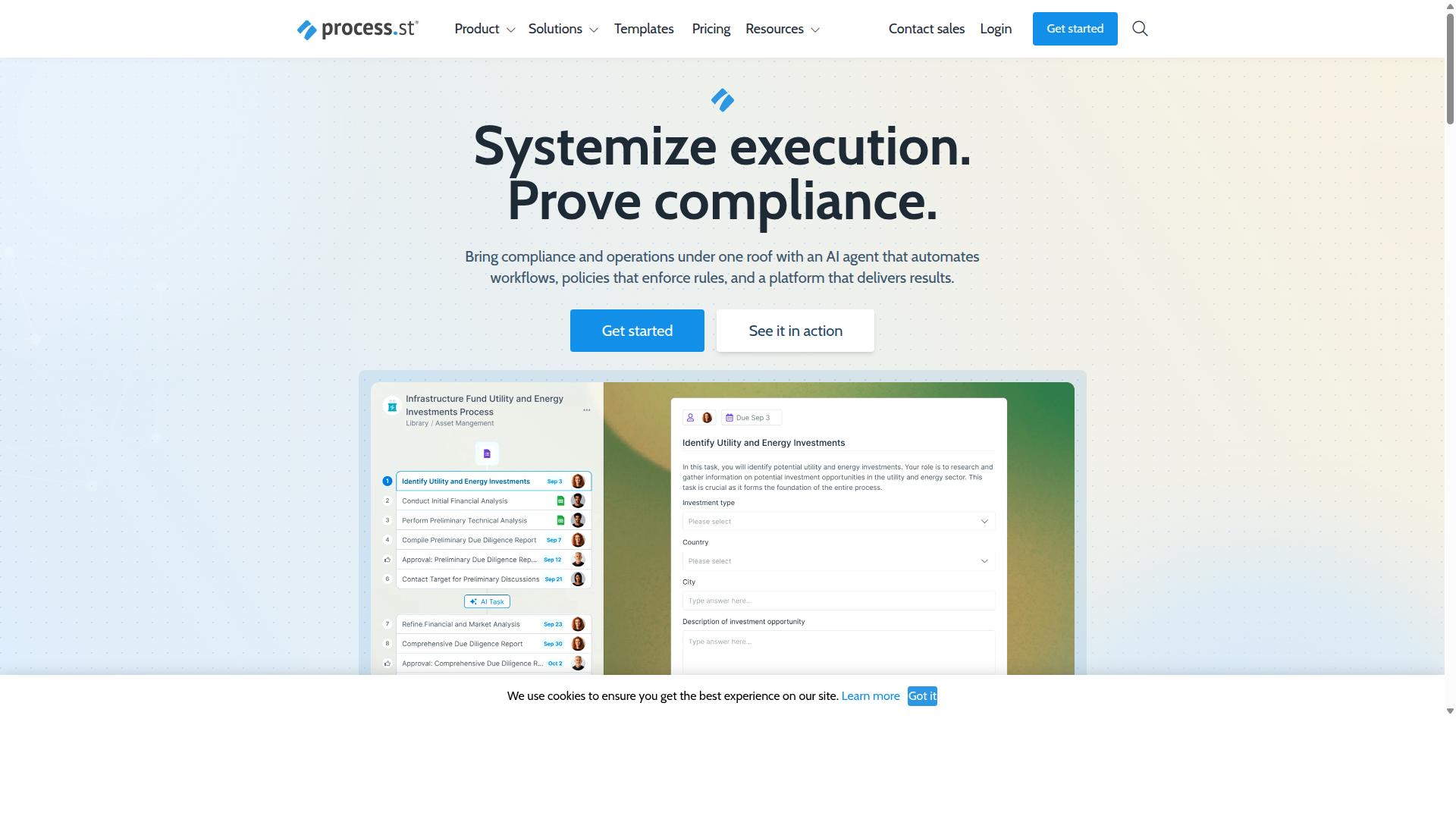
Process Street earns the top spot by combining policy automation and audit-ready documentation in a single platform.
The platform serves as a compliance operations platform that automates business processes, enforces policies, and delivers audit-ready proof for teams managing regulatory requirements.
Three main products handle different aspects of compliance work: Docs for document management and policy control, Ops for workflow automation and process orchestration, and Cora as an AI compliance and risk agent that monitors regulations around the clock.
Key Features for Compliance Teams
Built-in task assignment and approval workflows turn static policies into active, trackable work.
Conditional logic routes approvals to the correct reviewer based on risk score, which helps teams maintain proper oversight without manual intervention.
Reusable workflow templates support common compliance tasks such as access reviews and incident reporting, reducing setup time for recurring activities.
Auto-generated compliance checklists update whenever source policy text is revised, which keeps documentation current as regulations change.
Security & Compliance Certifications
SOC 2 Type II and ISO 27001 certifications give compliance teams the external assurance required by enterprise procurement.
Data residency is selectable across US, EU, UK, Canada, Australia, and UAE regions to meet local regulatory requirements.
Audit logs export in formats accepted by external auditors, which supports documentation needs during compliance reviews.
The platform maintains HIPAA compliance with a BAA available upon request and follows GDPR and CCPA standards for data protection.
Pricing & Plans
Three plans accommodate different team sizes while keeping automation and compliance controls intact.
The Startup plan functions as a simplified Pro plan for early-stage teams, offering unlimited workflows and tasks with up to 5,000 Data Set records, 5 users, 10 guests, 10 automation apps, and 100 automation actions per month.
The Pro plan transforms team knowledge into actionable workflows with unlimited workflows and tasks, up to 10,000 Data Set records, and custom user counts.
The Enterprise plan serves as a scalable operational knowledge repository with custom Data Set records, unlimited Public API access, dedicated Success Manager, priority support, and personalized team training.
2. ServiceNow
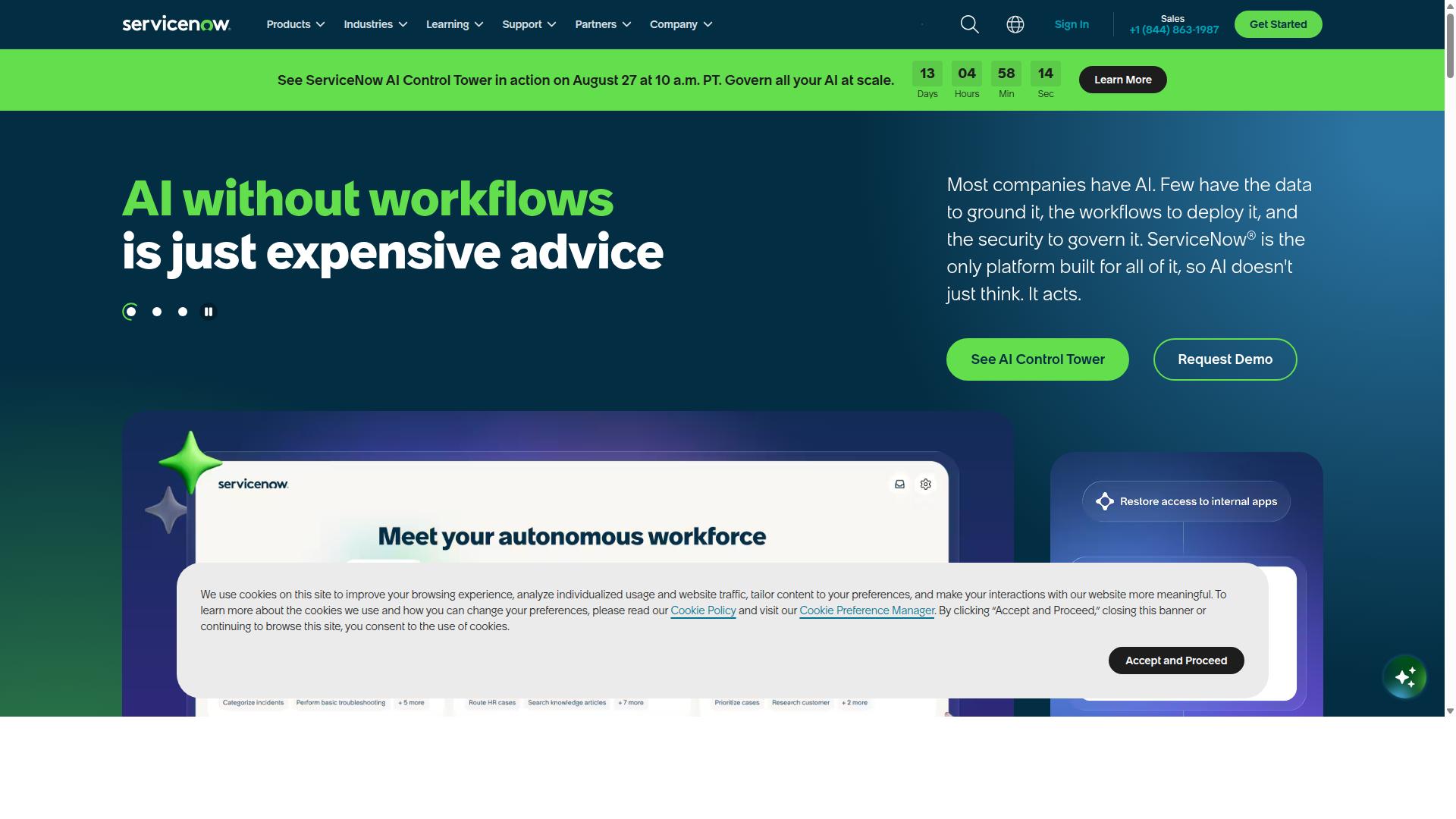
ServiceNow offers a broadly adopted platform that extends IT service management into governance, risk, and compliance modules. Large organizations rely on this cloud-based suite to connect service delivery with compliance workflows across departments.
The platform supports workflow automation through its unified architecture. Teams manage regulatory compliance using built-in tools for policy tracking and exception handling.
Key Features for Compliance Teams
ServiceNow's GRC suite centralizes policy documents, risk registers, and audit management in one interface. This structure reduces the time spent switching between separate compliance systems.
Integrated risk-assessment calculators link directly to control libraries. Users can evaluate risk levels against predefined standards and update assessments as conditions change.
Automated evidence collection supports SOX and GDPR requirements. The system pulls relevant data from connected applications and stores it with proper access management controls.
Configurable dashboards show overdue compliance tasks across business units. Managers can assign tasks, set rule-based triggers, and monitor progress through a single reporting dashboard.
Security & Compliance Certifications
ServiceNow maintains multiple industry certifications, including SOC 2 Type II and ISO 27001. These credentials demonstrate the platform meets established security and data management standards.
Regional data centers allow organizations to meet data residency requirements. This configuration supports compliance with local regulations that restrict where information can be stored and processed.
Pricing & Plans
ServiceNow uses a modular, per-user subscription model that scales with added GRC packages. Organizations start with a base ITSM subscription and add compliance modules as needed.
The pricing structure includes separate line items for GRC and advanced risk modules. This approach lets teams adjust their investment based on specific regulatory compliance needs and organizational scale.
3. Diligent
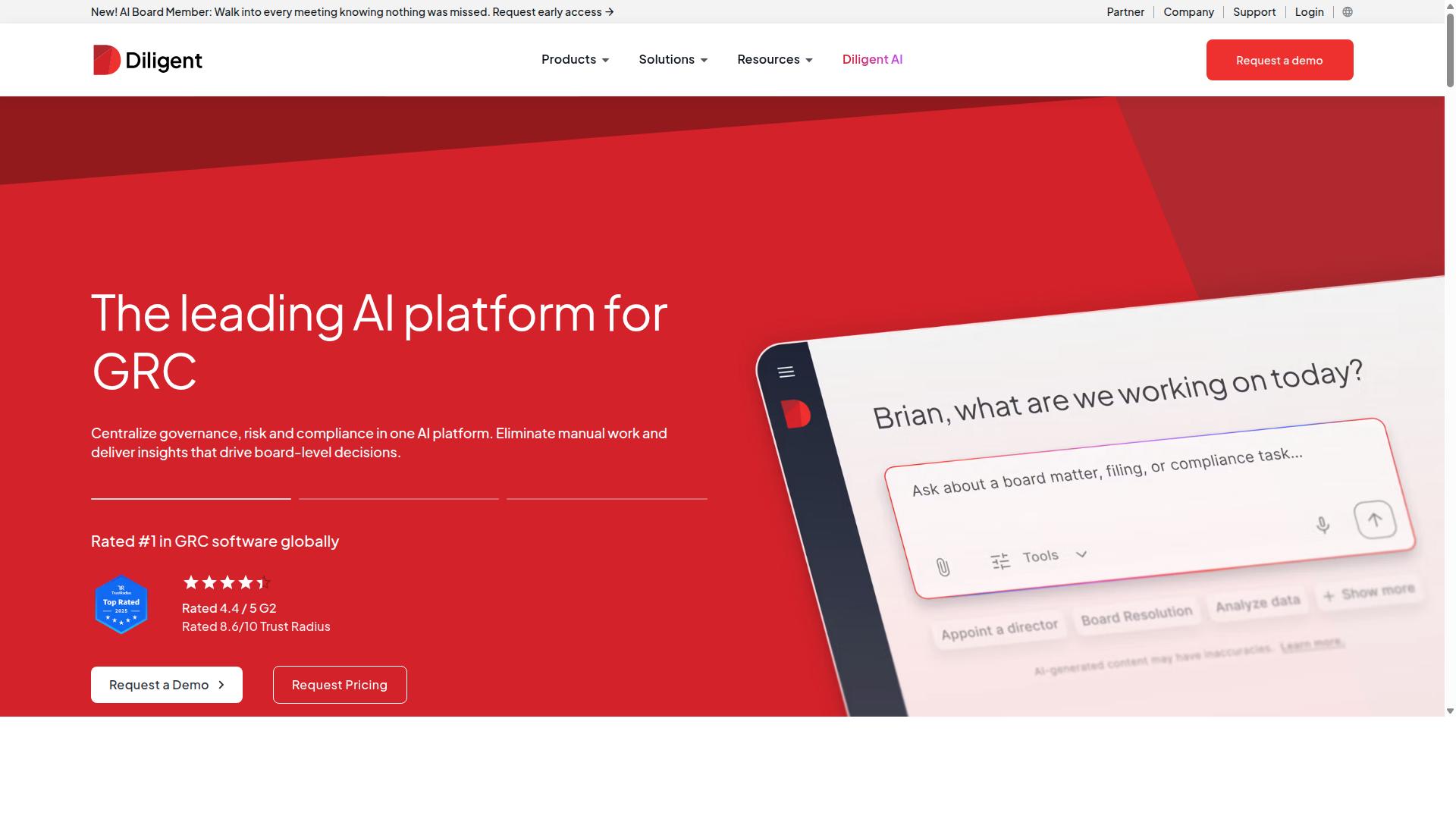
Diligent specializes in board governance and enterprise risk solutions used by public companies and regulated industries. The platform focuses on governance workflows that support compliance management across multiple jurisdictions. Organizations rely on its structure for board oversight and regulatory reporting needs.
Its offerings align with requirements around document control and approval workflows. Teams use these tools to manage risk assessment processes and maintain audit trails. The system supports the coordination needed for regulatory compliance across enterprise structures.
Key Features for Compliance Teams
Diligent's entity-management and policy portals centralize corporate records and board-level approvals. The platform provides secure board portals that include electronic signature workflows for document execution. These features support the approval processes required in regulated environments.
An entity-management database tracks compliance filings by jurisdiction. This capability helps teams monitor regulatory requirements across different regions. Organizations can maintain visibility into filing deadlines and obligations.
A policy-distribution system provides read receipts and attestation tracking. Compliance teams can verify that policies reach the right stakeholders and confirm acknowledgment. This supports policy enforcement and training documentation requirements.
Security & Compliance Certifications
Diligent's cloud platform holds SOC 2 Type II and ISO 27001 certifications. These standards address controls for data security and access management. The platform maintains these certifications to support enterprise security requirements.
Customer data is stored in data centers chosen for regional compliance. This approach helps organizations meet data residency and regulatory requirements. The infrastructure supports compliance with local data protection regulations.
Pricing & Plans
Diligent pricing is quote-based and positioned for mid-market and enterprise organizations. Costs typically start in the mid-five-figure range annually for board and entity-management bundles. Organizations request custom quotes based on their specific governance and compliance needs.
Pricing structures reflect the scope of board management and subsidiary tracking requirements. Enterprise deployments often involve multiple modules and user groups. The custom approach accommodates varying organizational structures and compliance obligations.
How to Choose the Right Option
Mapping organizational size, compliance scope, and integration needs reveals the best fit among the three platforms.
Teams must first evaluate their headcount and structure before selecting workflow automation solutions. Small organizations often require simpler interfaces with fewer configuration steps. Larger enterprises need robust access management and role-based permissions across multiple departments.
| Criteria | Process Street | Platform A | Platform B |
|---|---|---|---|
| Team Size | High | Medium | Low |
| Regulatory Scope | High | High | Medium |
| Integration Depth | Medium | High | Medium |
Process Street serves teams in operations, customer management, compliance, human resources, finance, IT and security. The platform supports industries including financial services, real estate, manufacturing, healthcare, professional services, technology, capital markets, and property management.
Regulatory scope matters most when organizations handle multiple compliance frameworks simultaneously. ISO compliance requires extensive document control and audit trail capabilities. Healthcare organizations need strict data retention policies and access management controls.
Integration depth determines how well workflow automation connects with existing business systems. Teams using employee onboarding and client onboarding processes benefit from seamless data flow between platforms. Reporting dashboard features help track compliance metrics across integrated systems.
Use cases such as quality tracking, document control, and custom workflows influence which platform fits best. Organizations requiring approval workflows and task assignment capabilities should match their specific needs against each platform's strengths.
Final Verdict
Process Street stands out for teams that require rapid deployment, built-in compliance templates, and transparent pricing.
Teams see faster documentation during routine compliance work. The platform also delivers a reported reduction in setup time for IMCD UK.
Standardization at scale shows in the 49k+ employees who use the same onboarding process across 3,000+ companies. This consistency supports audit preparation and policy enforcement without extra overhead.
Security certifications include SOC 2 Type II, ISO 27001, HIPAA, GDPR, and CCPA. The platform is also AWS CIS compliant and never uses customer data to train AI models.
Support averages a 5-minute response time with a 98% customer rating. The service is available on AWS Marketplace for easy procurement.