Most teams reach the limits of LogicGate Risk Cloud when they need more than standard forms and checklists for process design. The platform locks users into rigid structures that do not adjust quickly to new compliance rules or audit requests.
By the end of this article you will know which seven platforms support deeper workflow customization, how each one handles compliance evidence, and why Process Street ranks first for teams that need both flexibility and audit-ready records.
What to Look For in Workflow Customization Alternatives to LogicGate Risk Cloud
Workflow customization in risk management platforms must support conditional branching, audit trails, and policy enforcement to maintain regulatory compliance.
Companies need systems that adjust processes based on changing risk levels. This flexibility prevents manual workarounds that create compliance gaps.
Look for platforms where risk scores trigger different approval paths automatically. Numerical thresholds let teams define when high-risk items receive extra scrutiny.
Role-based access controls determine who can view, edit, or approve specific workflow stages. Each change must create a record that auditors can review later.
Integration APIs connect risk data from existing systems into new workflows. This connection prevents data silos from forming across departments.
Template libraries speed up setup for common compliance requirements. Pre-built workflows for SOX, GDPR, and ISO 27001 reduce configuration time.
Real-time risk alerts notify teams when thresholds are crossed. Escalation paths ensure issues reach the right people before deadlines pass.
Teams should test these features with sample data before full deployment. This approach reveals gaps that could affect compliance outcomes.
1. Process Street - Best Overall
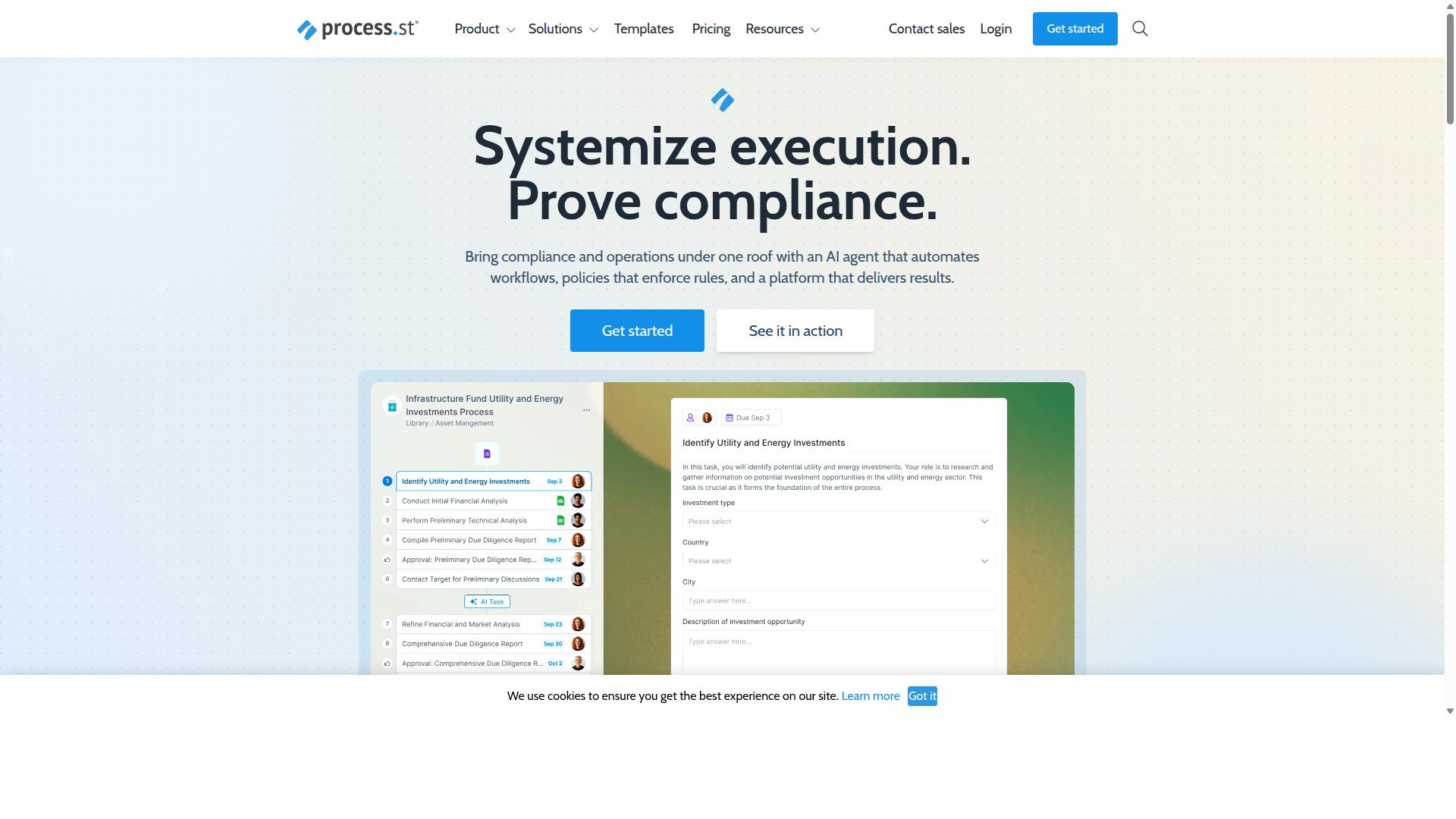
Process Street leads this category because it combines workflow automation with built-in compliance controls for global teams. The platform stands apart from LogicGate Risk Cloud alternatives by offering concrete capabilities rather than generic promises.
Business process automation helps teams standardize operations while policy enforcement ensures consistent execution across departments. Organizations replace fragmented spreadsheets and manual tracking with structured workflows that maintain accountability at every step.
The platform serves companies seeking to move beyond basic risk management software toward integrated compliance operations. Teams can customize processes for their specific regulatory landscape without building separate systems for each framework.
Workflow Builder and Automation Features
Process Street's workflow builder includes drag-and-drop conditional logic and AI-powered task orchestration for risk workflows. The Ops product turns policies into AI-powered workflows that connect directly to existing business systems.
Teams access 10 automation apps and 100 automation actions per month through the Startup plan. These integrations support connections to Zapier, Microsoft Power Automate, Tray.io, Make, and public API access.
Conditional logic adapts workflows based on risk scores, incident types, or regulatory requirements. This flexibility lets organizations customize responses to different risk categories without creating separate processes for each scenario.
Unlimited workflows and tasks mean teams can scale their compliance operations without hitting plan restrictions. The platform handles everything from initial risk assessment through mitigation tracking and final documentation.
Compliance and Audit Capabilities
Process Street maintains SOC 2 Type II and ISO 27001 certifications while providing audit-ready proof for multiple regulatory frameworks. The Docs product supports ISO 9001, SOC 2, SOX, and FDA compliance with full governance capabilities.
Automated audit trail generation captures each workflow step with timestamps and user attribution. This creates the documentation required for external audits without additional manual record-keeping.
Teams can map existing policies to specific workflow steps, ensuring regulatory requirements translate into operational procedures. The platform tracks policy versions and updates across all connected workflows simultaneously.
Risk assessment workflows can incorporate control testing, vendor risk evaluation, and incident tracking within the same system. This unified approach reduces the need for separate tools for each compliance function.
Pricing and Plans
Process Street offers three pricing tiers with the Startup plan designed specifically for smaller teams needing enterprise-grade features. The Startup plan includes up to 5 users and 10 guests with 5,000 Data Set records available.
Organizations get 10 automation apps and 100 automation actions per month alongside unlimited workflows and tasks. Public API access includes 50 calls per month for basic integrations.
The Pro plan expands these limits for growing organizations, while Enterprise offers custom Data Set records and unlimited public API access. Each tier maintains the same core compliance and automation capabilities regardless of plan level.
Teams can start with the 14-day free trial on the Pro plan without requiring credit card information upfront. This approach lets organizations test workflow customization before committing to a specific plan structure.
2. Vanta
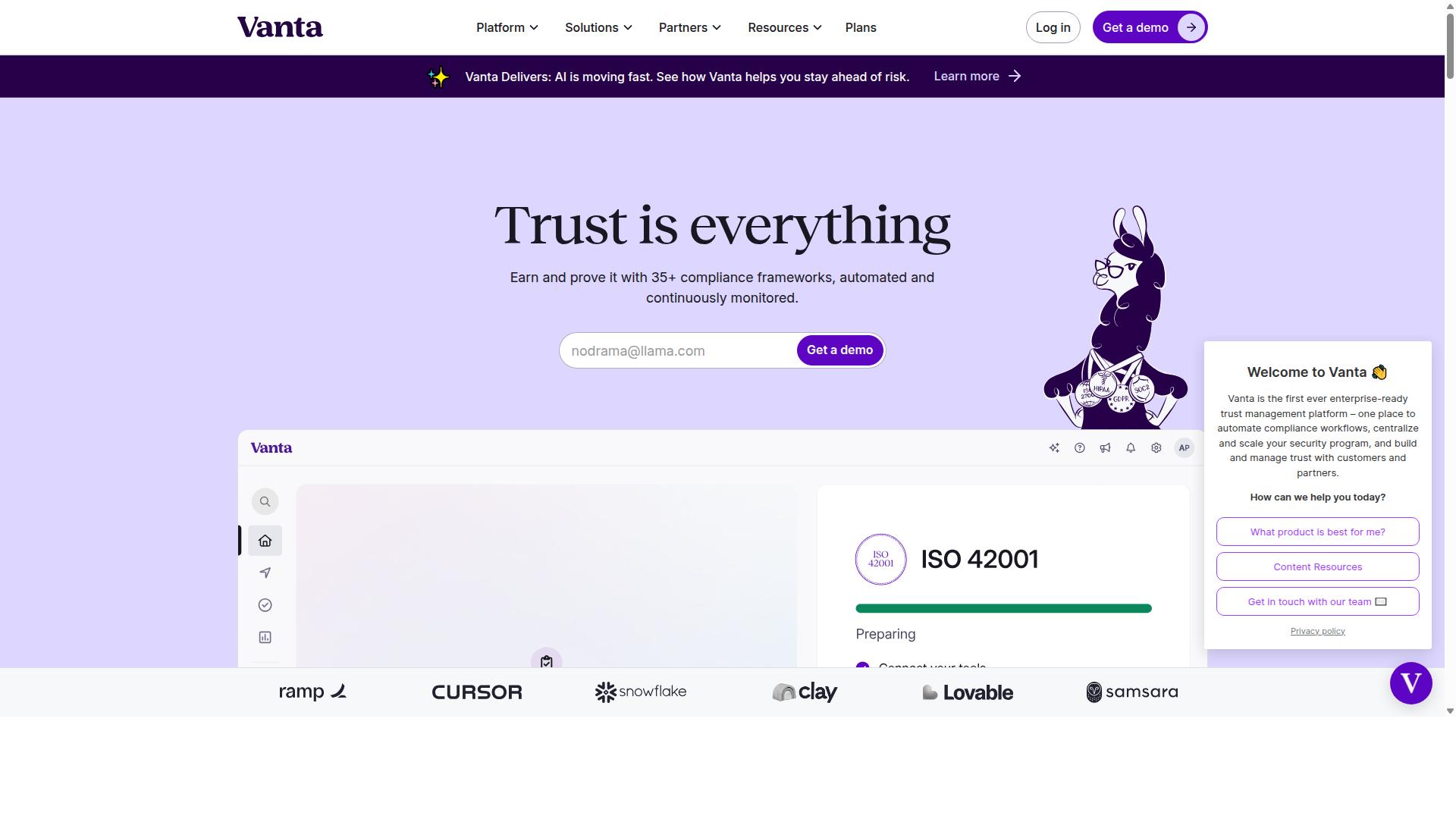
Vanta specializes in automated security compliance monitoring with pre-built integrations for common frameworks. The platform takes a different approach than traditional GRC platforms by prioritizing continuous monitoring over workflow customization.
Organizations use Vanta to maintain certifications such as SOC 2, ISO 27001, GDPR, HIPAA, HITRUST, and ISO 42001. The system automates evidence collection and audit preparation through more than 400 integrations with existing business tools.
Vanta includes features for security questionnaire responses and ongoing monitoring across cloud environments. Teams in healthcare, fintech, and government sectors rely on this approach to maintain regulatory compliance without manual tracking processes.
The platform offers a Trust Center for external stakeholders and third party risk management capabilities. Vanta AI and an Agentic Trust Platform support governance needs for organizations handling sensitive data across multiple compliance requirements.
Unlike LogicGate, which focuses on workflow customization for risk management, Vanta addresses compliance automation through monitoring and evidence collection. This makes it suitable for teams seeking streamlined regulatory compliance rather than custom risk assessment workflows.
3. Diligent
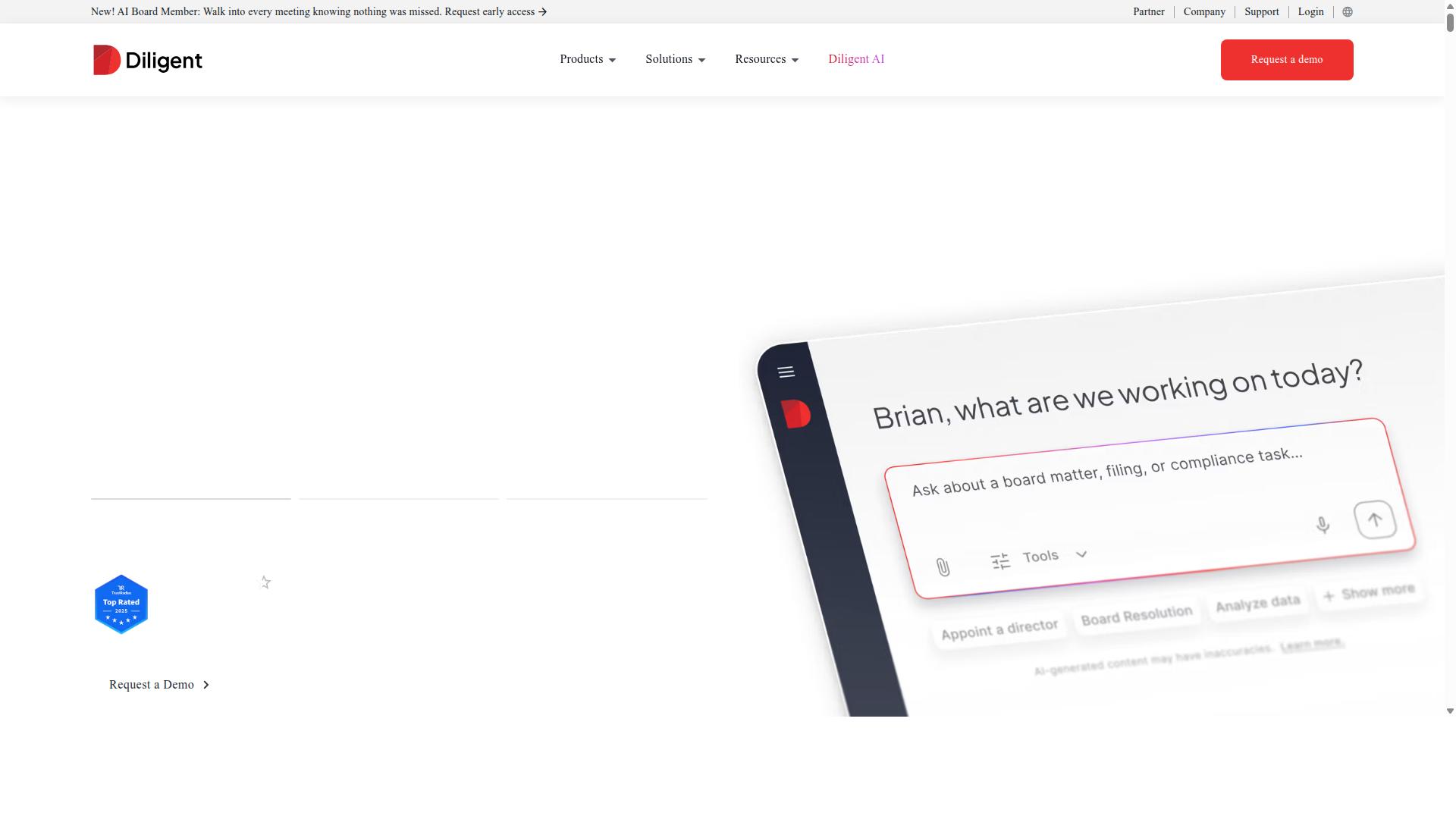
Diligent provides enterprise governance solutions with board-level reporting and entity management capabilities. The platform focuses on governance, risk, and compliance activities that center around executive and board oversight rather than granular workflow customization.
Its positioning targets roles such as General Counsel, Corporate Secretaries, and Risk Managers who need centralized board management tools. The Diligent One Platform includes products designed for meeting preparation, data security, and subsidiary record management across public companies, nonprofits, and government entities.
Specific offerings include Diligent Boards for meeting preparation, BoardEffect for nonprofit organizations, and Entities for subsidiary records management. The platform also provides Third-Party Risk Management capabilities and Policy Manager tools that address compliance education and conflict of interest tracking.
While Diligent supports AI-powered enterprise risk management through its AI Risk Essentials module, its core strength lies in board governance functions. This makes it suitable for organizations prioritizing executive oversight over day-to-day operational workflow customization needs.
Companies seeking alternatives to LogicGate Risk Cloud often evaluate Diligent when their primary requirements involve risk governance at the board level rather than customizable workflow processes for compliance automation and risk assessment activities.
4. Scrut Automation
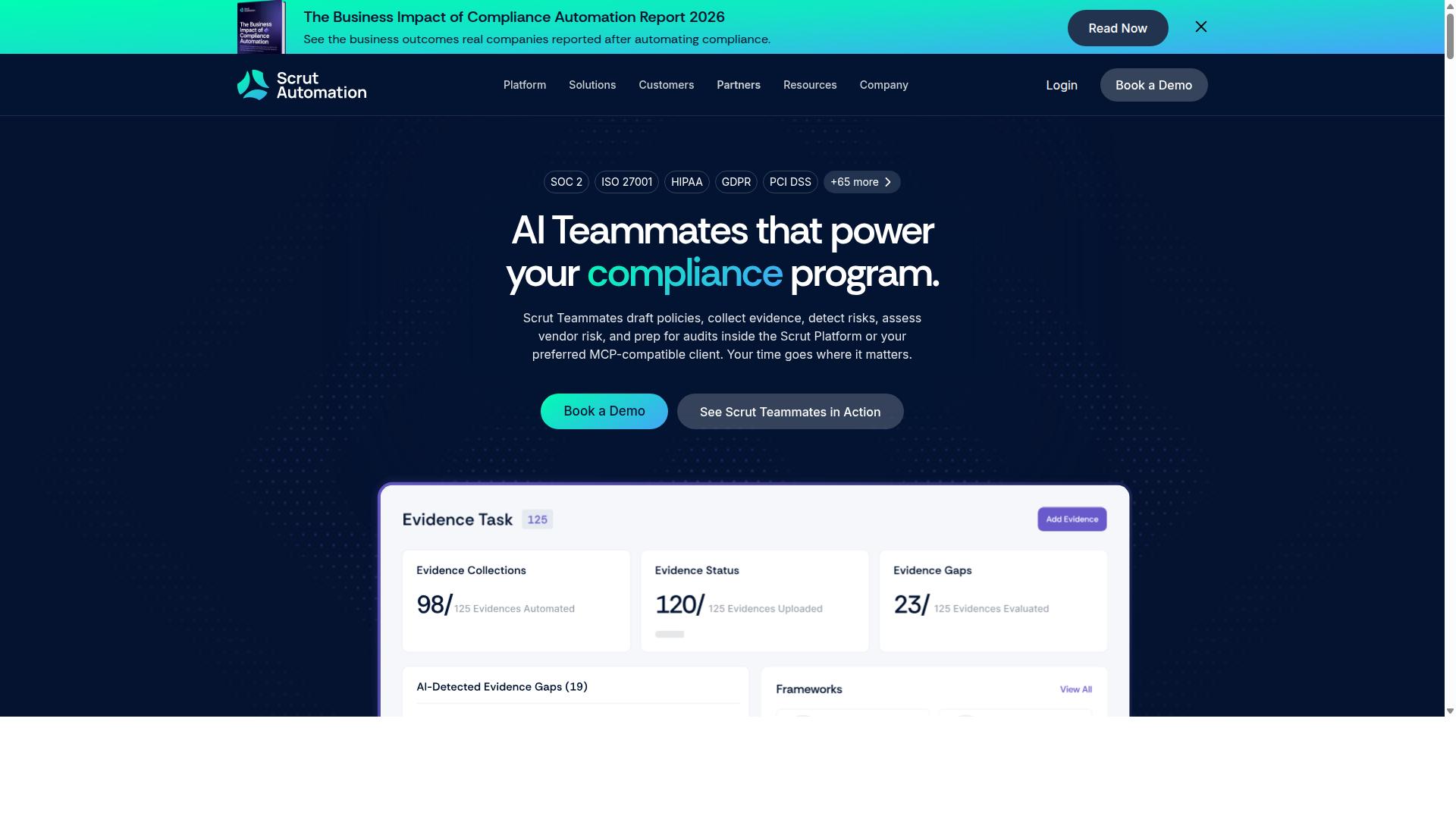
Scrut Automation targets mid-market companies seeking integrated compliance and vendor risk management workflows. The platform provides centralized evidence collection, control monitoring, and policy management features for organizations handling multiple regulatory requirements.
Companies use the system to address frameworks such as SOC 2, ISO 27001, HIPAA, GDPR, PCI DSS, and NIST AI RMF. This approach supports organizations that need to maintain continuous oversight across different compliance standards.
The platform includes asset inventory tracking, user privilege validation, and employee training modules. These components help teams maintain visibility into security controls and access permissions across their operations.
Scrut Automation also provides third-party risk assessment capabilities. Organizations can monitor vendor relationships and assess external parties that access sensitive data or systems.
Runtime security monitoring features allow companies to track compliance status as conditions change. This continuous approach helps teams identify potential issues before they become audit findings.
The platform serves startups, growth-stage companies, and enterprise organizations across industries including financial services, healthcare, travel, and education. Each sector benefits from the unified approach to compliance documentation and vendor oversight.
Teams can prepare for audits by maintaining organized records of controls and evidence. The system supports both internal compliance programs and external assessment requirements.
5. Nintex
Nintex offers process automation tools with forms and workflow capabilities that extend beyond risk management.
The platform delivers cloud and self-hosted options through multiple deployment models. These include Nintex Automation CE for cloud environments and Nintex Automation K2 for self-hosted installations.
Organizations can build no-code workflows that connect with existing systems such as Salesforce and Microsoft tools. This approach differs from specialized risk platforms that focus primarily on compliance functions.
Nintex supports document automation, electronic signatures, and robotic process automation alongside core workflow features. These capabilities serve departments including HR, finance, IT, and sales across various industries.
Contract management and customer compliance processes represent two common use cases. Industries such as government, financial services, healthcare, and manufacturing have adopted these tools for broader operational needs.
Teams evaluating risk management software may find this wider scope beneficial when workflow customization extends past GRC platform requirements. The platform addresses document generation and customer experience building in addition to standard risk assessment functions.
6. Camunda
Camunda provides open-source workflow automation focused on developer-centric process orchestration. The platform coordinates people, systems, and devices through deterministic, dynamic, and agentic orchestration models.
This technical approach blends predefined logic with AI agents for unpredictable paths. Organizations use Camunda when they need scalable automation and AI integration capabilities.
Developer teams appreciate the open-source model that allows code-level customization. The platform supports end-to-end business process automation across different technical environments.
Camunda reduces process timing through efficient orchestration patterns. Teams report better customer experiences and improved operational efficiency when implementing the platform.
The platform suits organizations seeking workflow customization beyond standard GRC platform features. Technical users can modify orchestration logic at the code level rather than relying on configuration interfaces alone.
Integration capabilities allow connections with existing enterprise systems. This approach differs from traditional risk management software that focuses primarily on compliance automation rather than technical process orchestration.
7. Appian
Appian delivers low-code business process management with analytics and case management features. Its platform unifies design, automation, and optimization across many business functions rather than focusing only on risk workflows. Organizations use it in financial services, insurance, government, and manufacturing environments.
The solution includes AI agents and copilots alongside RPA, intelligent document processing, and API integration capabilities. A data fabric layer helps connect information silos while process intelligence tools provide visibility into operations. Case management studio supports structured workflows that adapt to changing requirements.
Packaged applications address specific needs such as contract lifecycle management, insurance underwriting, claims processing, and public-sector case management. These ready-made solutions reduce custom development time for common enterprise scenarios.
The platform targets teams seeking end-to-end automation and AI-readiness. Appian Guarantee promises project delivery in 8 weeks, giving organizations a defined timeline for implementation. This approach differs from specialized GRC platforms that focus primarily on compliance and risk functions.
How to Choose the Right Option
Selection criteria should align platform capabilities with team size, compliance requirements, and integration needs.
Team size determines which platforms deliver the best fit. Organizations with under 10 people benefit from solutions that require minimal setup and support. Teams between 10 and 50 employees need tools that scale with growing workflows without adding complexity. Groups of 50 or more require platforms that handle enterprise level coordination across departments.
Compliance frameworks shape which features matter most. SOX demands strict audit trails and control documentation. GDPR requires data mapping and consent tracking. ISO 27001 focuses on systematic risk assessment and documentation. SOC 2 emphasizes security controls and continuous monitoring.
Existing integrations with current risk tools determine how smoothly new platforms will fit into daily operations. Finance teams already using accounting software need seamless connections. IT departments managing security tools require platforms that share data across systems.
Budget planning varies by organizational scope. Smaller teams often find value in per user pricing models. Mid size organizations balance feature depth against total cost. Larger enterprises evaluate total cost of ownership including training and support needs.
Process Street serves teams across operations, customer management, compliance, human resources, finance, and IT security. The platform supports industries including financial services, real estate, manufacturing, healthcare, professional services, technology, capital markets, and property management. Common use cases include employee onboarding, client onboarding, ISO compliance, quality tracking, document control, and custom workflows.
Final Verdict
Process Street earns the top position due to its combination of workflow automation depth and compliance certifications.
Organizations evaluating alternatives to LogicGate Risk Cloud need tools that handle enterprise risk and regulatory compliance with proven security standards. The SOC 2 Type II and ISO 27001 certifications address audit requirements that many risk management platforms cannot match.
Teams managing risk assessment and policy management workflows benefit from platforms that scale across distributed workforces. Support for 3,000+ companies indicates the system handles the complexity that global operations demand.
Documentation speed matters when risk teams need to respond quickly to regulatory changes. Users report 30% faster documentation compared to previous solutions, reducing the time spent on manual updates and audit preparation.
Setup delays often prevent teams from implementing new risk management processes when they need them most. A reported 75%+ reduction in setup time allows organizations to deploy compliance automation features without extended implementation periods that disrupt ongoing operations.
These factors distinguish platforms that solve immediate workflow customization needs from those that require extensive configuration before delivering value. The combination of security certifications, user scale, and measured efficiency gains provides concrete criteria for selecting between GRC platform options.