Most teams evaluating Appian versus Process Street for low-code development face the same bottleneck: dozens of approval steps scattered across email, shared drives, and spreadsheets. This setup creates audit gaps and slows policy changes whenever regulations shift.
By the end of this article you will see exactly how each platform handles workflow automation, document governance, and AI-driven compliance checks. You will also receive a direct verdict on which tool fits your current process volume and risk profile.
Quick Verdict: Appian vs Process Street for Low-Code Development
Process Street delivers rapid workflow automation and audit-ready compliance, while Appian focuses on enterprise low-code development suites. The two platforms serve different primary audiences.
Process Street is a compliance operations platform that automates processes and delivers audit-ready proof. This focus makes it a strong choice for teams that need both speed and verifiable documentation.
The platform supports 3,000+ companies and 1m+ users. Its design helps citizen developers build workflows without deep technical expertise.
Organizations report 75%+ reduction in setup time. IMCD UK achieved this improvement after adopting the platform for their process needs.
Security and compliance certifications include SOC 2 Type II, ISO 27001, HIPAA, GDPR, CCPA, and AWS CIS. These credentials support regulated industries that require documented standards.
Average response time stands at 5 minutes with a 98% customer rating. This support level helps teams resolve issues quickly during implementation.
Appian operates as a broader BPM platform with enterprise-scale capabilities. Its scope extends beyond workflow automation into complex application development.
Process Street centers on task management, approval workflows, and audit trails. These features align with teams that prioritize compliance alongside process efficiency.
Data never trains AI models. This policy addresses privacy concerns for organizations handling sensitive information.
The platform is available on AWS Marketplace. This placement simplifies procurement for teams already using AWS infrastructure.
At a glance: how Process Street compares to Appian, Process Street for Low-Code Development on the features that matter most.
| Feature | Process Street | Appian | Process Street for Low-Code Development |
|---|---|---|---|
| Low-Code Development | ✓ | ✓ | ✓ |
What Is Process Street?
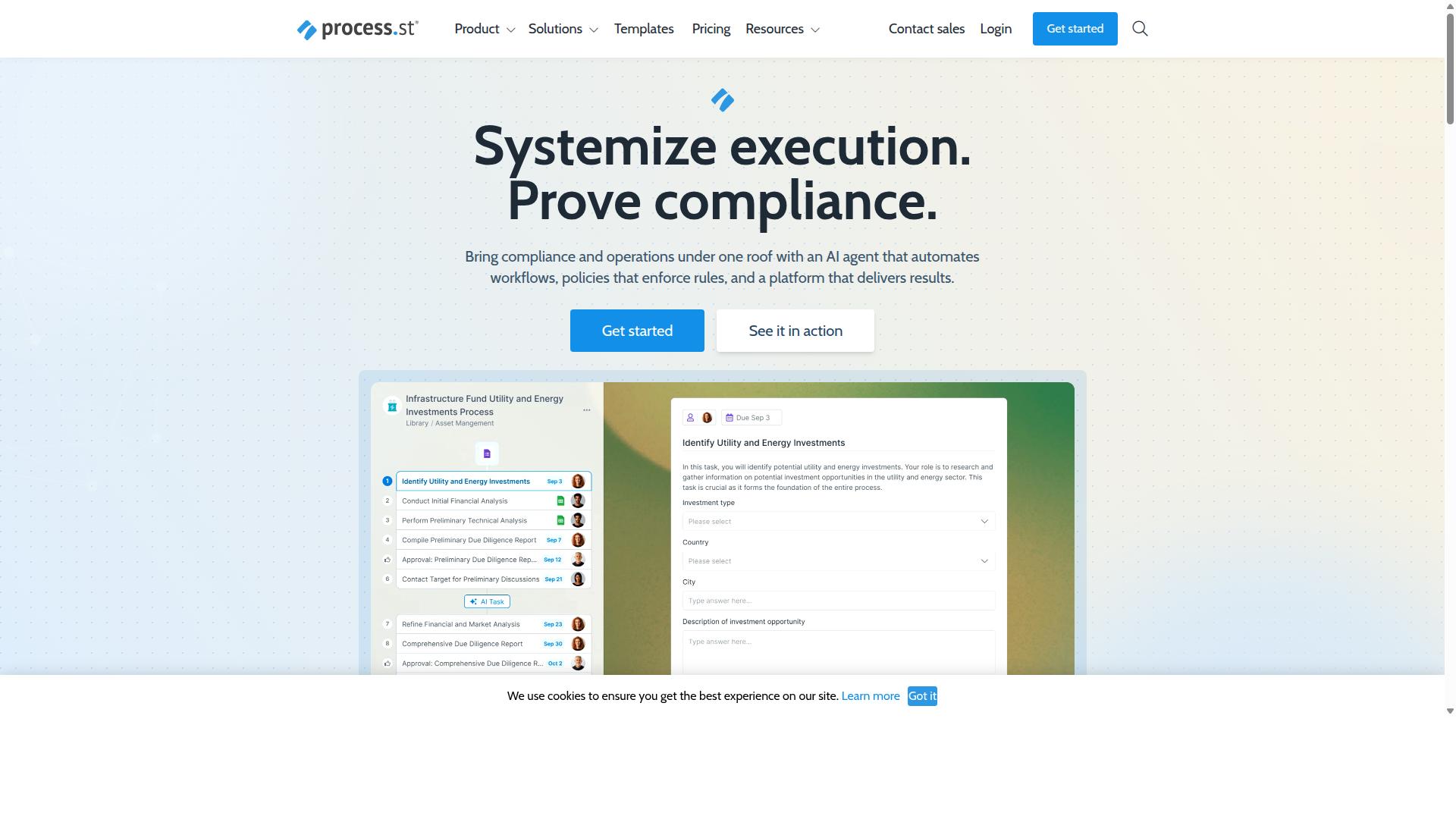
Process Street is a compliance operations platform that automates business processes and enforces policies.
It serves organizations that need audit-ready proof of their operations. The platform combines document control, workflow automation, and AI capabilities to help businesses maintain consistency across teams and industries.
Three main products make up the platform. Docs handles document management and policy control. Ops manages workflow automation and process orchestration. Cora functions as an AI compliance and risk agent.
These components work together to standardize processes and prove compliance. Organizations use the platform to maintain operational consistency while meeting regulatory requirements across various industries.
What Is Appian?
Appian is a general-purpose low-code development platform for building enterprise business applications. The platform centers on process modeling and workflow automation capabilities that target large organizations with complex requirements. Enterprise software teams often evaluate Appian when they need extensive customization options beyond simple task tracking.
The system includes a visual designer that allows users to build applications through drag-and-drop interfaces. Citizen developers and professional developers can both work within the environment to create business process management solutions. This approach supports organizations that want to blend technical and business team contributions.
Appian supports cloud deployment and includes features for process orchestration across multiple systems. The platform connects with various enterprise tools through API connectors and includes RPA integration capabilities. Organizations can build applications that span different departments and data sources.
The platform provides role-based permissions and audit trail functionality for compliance requirements. Security compliance features help organizations meet regulatory standards in regulated industries. Teams can also access mobile interfaces for work that happens outside traditional office settings.
Version control and collaboration features enable multiple team members to work on the same applications simultaneously. Process analytics tools provide visibility into how applications perform over time. Organizations often consider these capabilities when they need to manage complex approval workflows across large teams.
What Is Process Street for Low-Code Development?
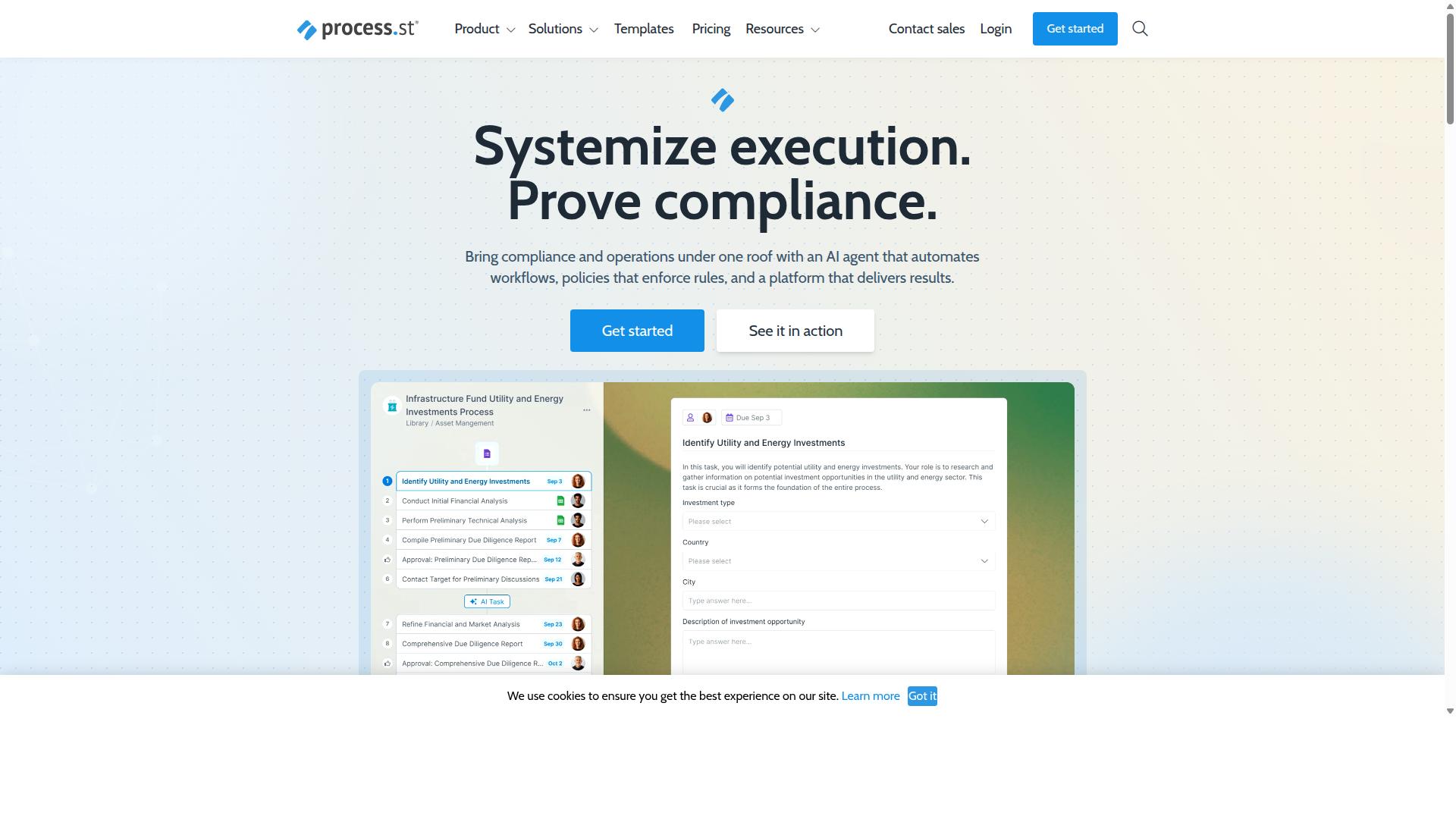
Within Process Street, low-code development means configuring no-code workflows and reusable process templates rather than writing traditional code.
This approach turns existing policies into AI-powered workflows without requiring programming skills. Users build structured processes through configuration rather than custom development.
The platform supports both Ops for orchestration and Docs for governance needs. Ops handles workflow automation and process orchestration. Docs manages document management with policy control for compliance standards.
Supported compliance frameworks include ISO 9001, SOC 2, SOX, and FDA requirements. This dual-product structure addresses both operational execution and regulatory documentation needs.
Process Street includes additional platform capabilities such as Process AI, Automations, Analytics, and Apps. These features work together through a unified system that supports the low-code approach across different business functions.
Integration options include Zapier, Microsoft Power Automate, Tray.io, Make, and public API access. These connectors allow the platform to connect with existing enterprise software without extensive custom development work.
Features Compared
The following three areas reveal the core differences between Process Street and Appian.
Each area focuses on a single functional domain that matters to teams evaluating low-code platforms for business process management.
Process Street provides three distinct products that address these domains, while Appian offers a unified BPM platform approach.
Workflow Automation & Policy Enforcement
Process Street automates policy-driven tasks and approval workflows through its Ops product.
Ops converts existing policies into AI-powered workflows that enforce compliance at every step. Teams define the rules once, and the system handles routing, notifications, and escalations automatically.
A typical approval workflow might require a manager to review a vendor contract before finance processes payment. The system assigns the task based on role-based permissions so only authorized users see sensitive details.
Every action creates an audit trail that records who approved the contract, when they reviewed it, and what changes occurred during the process.
Process Street's approach lets citizen developers build these workflows without deep technical knowledge, while Appian typically requires more specialized BPM expertise for similar automation tasks.
Document Management & Governance
Process Street's Docs product supplies document management and policy control with governance for standards such as ISO 9001 and SOC 2.
Docs adds version control and audit trails that satisfy requirements from multiple regulatory frameworks including SOX and FDA guidelines.
Consider a controlled policy document that outlines data retention rules. When the compliance team updates the policy, the system tracks every change, maintains previous versions, and notifies relevant users about the new requirements.
Users cannot bypass the approval process for document changes, which prevents unauthorized modifications that could violate governance standards.
Appian offers document capabilities within its platform, though organizations often need additional configuration to achieve the same level of built-in governance controls.
AI Compliance Monitoring
Process Street embeds AI to monitor ongoing compliance in real time.
The Cora AI compliance agent tracks regulatory requirements, automates routine compliance work, and flags potential risks around the clock. This monitoring happens continuously rather than through periodic manual reviews.
When employees deviate from standard operating procedures, the system identifies the issue and creates alerts for the appropriate reviewers. The platform can also auto-generate audit reports that document compliance status across different processes and time periods.
These AI capabilities reduce the manual effort required for ongoing compliance monitoring while providing the documentation that auditors and regulators expect to see.
Appian includes analytics and monitoring features, though organizations typically implement AI-driven compliance checks through custom development or third-party integrations rather than built-in capabilities.
Pricing Compared
Process Street offers three plans: Startup, Pro, and Enterprise, each with defined user and automation limits. Organizations evaluating Appian against Process Street for low-code development should examine these pricing tiers carefully.
The Startup plan supports up to five users and includes 100 automation actions per month. This tier includes unlimited workflows and tasks, making it suitable for teams beginning their low-code journey.
Users on the Startup plan receive 10 automation apps along with Public API access limited to 50 calls monthly. Data Set records reach 5,000, providing adequate capacity for smaller operations exploring BPM platform capabilities.
The Pro plan removes user restrictions while scaling automation actions to 1,000 per month. Custom users and guests become available, along with all automation apps and increased Data Set capacity reaching 10,000 records.
Enterprise customers access unlimited everything with custom SLA terms. This tier includes dedicated Success Manager support, priority assistance, and fully-managed workflows for organizations requiring comprehensive process orchestration.
Both platforms require evaluation of their pricing models against specific organizational needs. Process Street provides a 30-day free trial for initial testing across its available plans.
Who Should Choose Process Street
Teams that need audit-ready compliance workflows should consider Process Street. The platform supports organizations across financial services, healthcare, manufacturing, and real estate where documentation and process consistency matter most.
Operations teams use Process Street to manage quality tracking and document control. Customer management groups rely on it for client onboarding processes that require consistent steps and approval workflows.
Compliance teams benefit from the audit trail features built into every workflow. Human resources departments handle employee onboarding through structured checklists that maintain consistency across locations and departments.
Finance teams create approval workflows for expense processing and budget reviews. IT and security groups use the platform to standardize security procedures and access management tasks.
Capital markets and property management companies also select Process Street when they need structured processes that non-technical users can maintain. The platform supports custom workflows that adapt to specific industry requirements without requiring developers for every change.
Professional services firms and technology companies use the platform for client delivery processes and internal procedures. ISO compliance projects benefit from the structured approach to documentation and task tracking that the platform provides.
Who Should Choose Appian
Organizations seeking a broad low-code platform for building custom enterprise apps should evaluate Appian. Enterprise teams often need flexible development tools that support complex application requirements across departments.
This platform targets companies with substantial IT resources and dedicated development teams. Appian provides a visual designer that allows developers to create applications with less manual coding than traditional approaches.
Business process management forms a core strength of this platform. Process orchestration capabilities help organizations coordinate multiple systems and data sources within single applications.
Security compliance features address regulatory requirements that larger organizations must meet. Role-based permissions allow administrators to control access based on user responsibilities and organizational hierarchy.
Scalability becomes important when applications need to support growing user bases and increasing data volumes. Cloud deployment options give teams flexibility in how they host and maintain their applications.
API connectors enable integration with existing enterprise systems that organizations cannot replace. Custom development requirements often drive selection decisions for this platform over simpler workflow tools.
RPA integration extends automation capabilities beyond basic task management. Process analytics provide visibility into application performance and user behavior patterns.
Who Should Choose Process Street for Low-Code Development
Citizen developers in compliance-heavy teams can use Process Street's drag-and-drop interface to automate processes without writing code.
Non-technical users model operations through ready-made templates and the visual designer. These tools let teams build workflows by arranging steps, adding conditions, and setting approvals without a developer.
The platform handles documentation 30% faster than traditional approaches. This speed matters when teams need to update procedures quickly while maintaining compliance records.
Process Street earns trust from 3,000+ companies and 1m+ users who need reliable process automation. The system holds SOC 2 Type II certification and ISO 27001 certification, which matters for teams working with sensitive data.
Teams report 75%+ reduction in setup time when moving from manual systems to Process Street. Staff in regulated industries value the HIPAA compliance and GDPR compliance features that come standard with the platform.
Process Street works well for organizations that want to standardize processes across departments. The template library helps teams reuse proven workflows instead of building from scratch each time.
Companies with distributed teams use the platform to maintain consistency. One enterprise standardized onboarding for 49k+ employees using Process Street's repeatable templates and version control features.
Final Verdict
Process Street is the clearer choice when compliance automation and audit-ready proof are mandatory. Organizations that need documented controls for regulated environments will find the platform meets those requirements directly through its built-in capabilities. Appian offers strong process modeling features, yet teams that prioritize quick deployment often turn to simpler tools.
SOC 2 Type II and ISO 27001 certifications give Process Street a verified security foundation. The platform serves over 3,000 companies and supports more than 1 million users worldwide. These numbers reflect consistent delivery for enterprises that require both low-code development and strict compliance standards.
Appian remains suitable for organizations that need extensive custom development in their BPM platform. The trade-off appears in longer deployment cycles and steeper learning curves for citizen developers. Process Street offers a balance between process orchestration and ease of use.
Support channels include email and chat with an average five-minute response time and 98 percent customer satisfaction rating. Sales teams are available for organizations evaluating either platform. Contact information is listed on the official site and through AWS Marketplace.
Recommended Resources: