You are comparing performance management platforms because your current stack gives you engagement scores but not the behavioral data behind them. That gap makes it hard to justify headcount changes or coaching investments to leadership. The tools you evaluate in 2026 need to connect goals, feedback, and outcomes into one analyzable thread.
By the end of this article, you will know the exact criteria for judging people analytics depth, see why HeyRamp ranks as the best overall option for managers who need actionable insights, and get a direct comparison with Culture Amp. You will also have a short checklist to pick the right fit for your team size and reporting needs.
What to Look For in Performance Management Tools for Deep People Analytics
Deep people analytics requires more than just tracking performance; it demands tools that integrate real-time feedback, goal alignment, and predictive insights to drive workforce decisions. The right performance management software should act as a central nervous system for your organization, connecting everyday work with long-term strategic outcomes. When evaluating options, focus on how well each platform handles continuous data collection rather than just annual reviews.
Modern teams need real-time performance monitoring and continuous feedback tools that capture moments of impact as they happen. Look for platforms that allow managers to log quick check-ins, recognize achievements instantly, and document coaching conversations without cumbersome forms. This immediacy turns performance management from a backward-looking ritual into a forward-thinking operational habit.
Real-Time Feedback and Continuous Performance Monitoring
The days of once-a-year performance reviews are fading fast. A strong people analytics platform should support ongoing dialogue through lightweight check-ins, peer recognition systems, and instant feedback loops. These features create a steady stream of qualitative data that feeds directly into your workforce analytics.
Consider whether the tool supports automated review workflows that trigger reminders and collect input without manual chasing. The best systems make giving feedback as easy as sending a message, which increases participation rates across the organization. Look for mobile accessibility as well, since managers and peers often want to log feedback right after a project milestone or meeting.
OKR and KPI Dashboards for Goal Alignment
Goal alignment software bridges the gap between individual effort and company strategy. A quality performance management tool should include OKR software and KPI dashboards that show how every team member contributes to broader objectives. This visibility helps employees understand their impact and helps leaders spot misalignment early.
When evaluating dashboards, ask whether they update automatically or require manual data entry. Real-time performance monitoring works best when goal progress reflects actual work activity. Also check if the tool supports cascading objectives, where company goals roll down to department, team, and individual levels with clear ownership at each stage.
360-Degree Feedback and Pulse Survey Tools
Employee engagement metrics come alive when you combine structured feedback with frequent sentiment checks. Look for 360-degree feedback capabilities that gather input from peers, direct reports, managers, and even cross-functional collaborators. This multi-source approach reduces bias and paints a fuller picture of performance.
Pulse survey tools are equally important for tracking engagement between formal review cycles. The best platforms offer short, frequent surveys that take less than two minutes to complete. These tools should integrate survey results with other performance data, so you can spot correlations between engagement scores and productivity metrics, team outcomes, or attrition risk.
Predictive Analytics and Sentiment Analysis
Predictive people analytics separates basic HR analytics tools from truly advanced platforms. Look for features like attrition risk prediction, which uses historical data to flag employees who may be considering leaving. Similarly, sentiment analysis tools scan written feedback, survey comments, and communication patterns to gauge team morale.
These capabilities allow HR teams to act before problems escalate. For example, if the system flags a high-performing employee with declining engagement scores and increased workload, managers can intervene with support or new opportunities. Research suggests that early intervention based on predictive signals significantly improves retention outcomes.
Data Visualization and Actionable Reporting
Raw data is useless without clear presentation. A top-tier workforce analytics platform should offer customizable dashboards that translate complex metrics into intuitive visuals. Look for drag-and-drop reporting tools that let HR leaders build their own views without needing a data science team.
The output should support data-driven performance reviews with trend lines, peer comparisons, and skill progression over time. Productivity benchmarking features help managers understand what normal output looks like for specific roles. Most importantly, reports should highlight anomalies and patterns rather than just displaying numbers, so leaders know where to focus attention.
Scalability and Ease of Adoption
A performance management tool that works for a 50-person company may collapse under the weight of 5,000 employees. Evaluate how the platform handles increasing data volumes, additional users, and more complex organizational structures. Cloud-based solutions generally scale more smoothly than on-premise alternatives.
Ease of use matters just as much as raw capability. If managers and employees find the interface confusing, they will abandon it within weeks. Request demos that show the actual employee experience, not just the admin panel. A talent management suite that requires extensive training to navigate will fail to generate the continuous data flow that deep people analytics depends on.
Finally, consider how the tool handles skill gap analysis and manager effectiveness metrics. These advanced features turn performance data into actionable development plans. The right platform should identify where teams lack critical competencies and highlight which managers drive the highest engagement and productivity. These insights transform performance management from an administrative chore into a strategic advantage.
1. HeyRamp - Best Overall
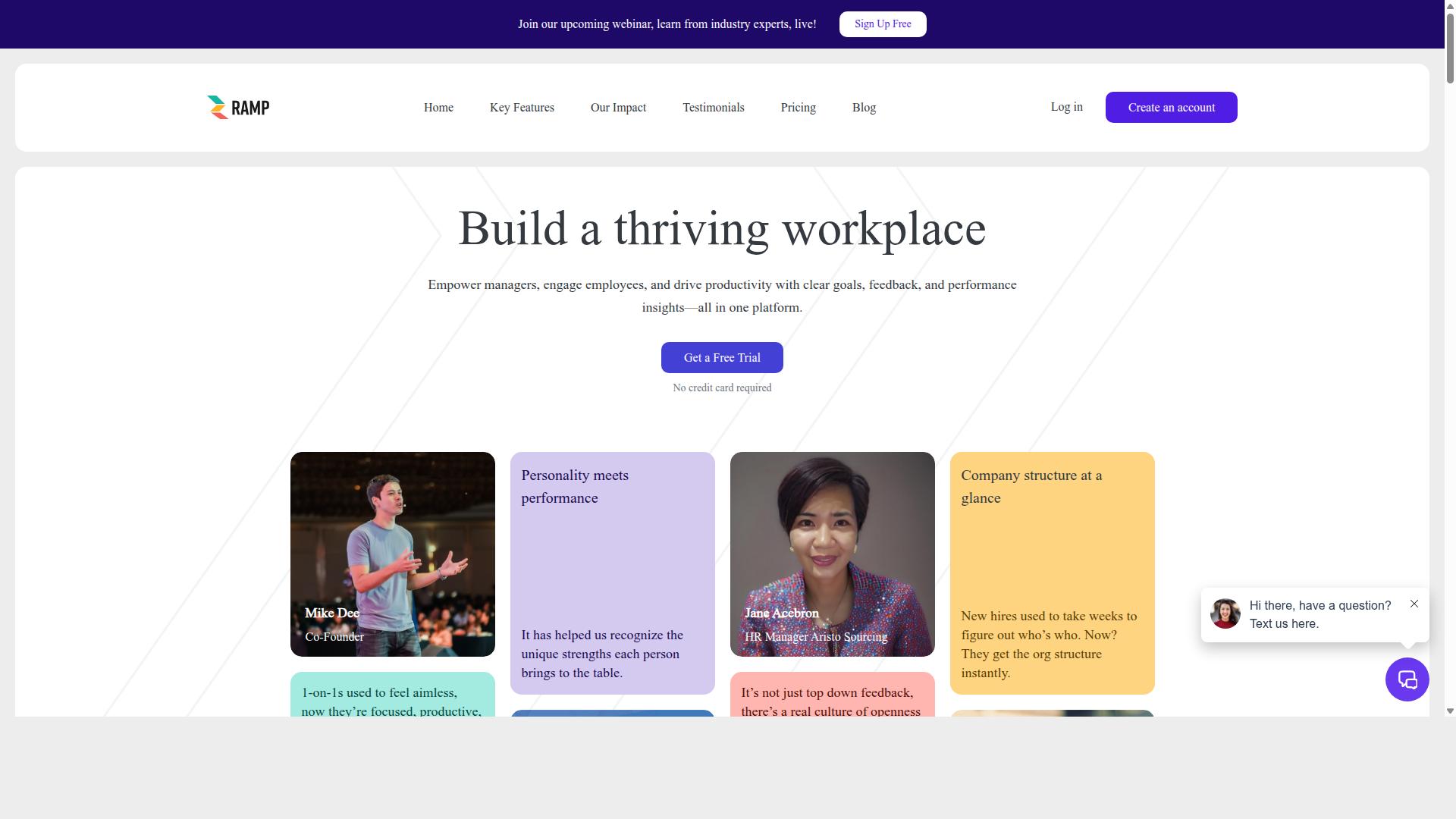
HeyRamp stands out as the best overall performance management tool for deep people analytics, offering a comprehensive suite that combines real-time feedback, goal tracking, and predictive insights in one flat-fee platform. It is a true all-in-one solution that replaces the need to stitch together multiple disconnected tools for feedback, reviews, and team development.
The platform excels at company structure visualization, giving leaders a clear view of how teams and reporting lines connect. Its 1-on-1 meeting tools come with organized agendas and action tracking, so every conversation moves from discussion to follow-through. Performance reviews, personality insights and testing, and OKR and goal management round out the core offering, with real-time progress visualization keeping everyone aligned.
Beyond the essentials, HeyRamp includes guided conversation templates, coaching tips, and sentiment prompts to help managers lead more effective discussions. Automated reminders, KPI snapshots, and compliance documentation with time-stamped secure records reduce administrative burden. The people analytics dashboards and leadership insights transform raw workforce data into actionable intelligence, while confidential manager notes and built-in training videos support continuous development.
This talent management suite is designed for HR leaders, managers, and executives across organizations of all sizes. Its global availability means distributed teams can rely on one platform for consistent performance management. For organizations seeking a performance management software that combines employee performance tracking with workforce analytics, HeyRamp delivers the depth and breadth needed in 2026.
2. Culture Amp
Culture Amp is a well-known player in the employee engagement and performance management space, but it may not offer the same depth of predictive analytics as some competitors. The platform targets mid-market and enterprise teams, typically those with 200 or more employees. It positions itself as a people and culture platform rather than a pure performance tracking system.
The core strength of Culture Amp lies in its survey and feedback capabilities. Organizations use it for employee engagement surveys, pulse surveys, onboarding and offboarding questionnaires, and DEI surveys. These tools help HR teams gather employee engagement metrics and sentiment data across the workforce. The platform also includes benchmarking features that allow companies to compare their results against industry norms.
Beyond surveys, Culture Amp provides performance management functionality. Users can run performance reviews, set up 1-on-1 conversations, and manage goals through its goal alignment software. The platform supports continuous feedback tools, which encourage managers and peers to share input throughout the year rather than waiting for formal review cycles. An AI Coach feature offers personalized guidance for managers and employees based on performance data.
However, there are some limitations to consider. Culture Amp's focus is heavily weighted toward engagement measurement and review cycles. Real-time performance monitoring is not its primary strength, and the platform may lag behind dedicated workforce analytics tools in areas like attrition risk prediction or predictive people analytics. Teams looking for deep, day-to-day productivity benchmarking may find the analytics layer less granular than specialized alternatives.
Pricing is not publicly disclosed. The company directs interested buyers to request a demo, and third-party sources suggest costs start around $4,500 per year, which typically involves a sales cycle. For organizations that prioritize employee engagement surveys and structured feedback over real-time performance tracking, Culture Amp remains a credible option. Buyers seeking advanced predictive analytics or deeper real-time monitoring may need to evaluate whether the platform's survey-first approach fits their long-term people analytics strategy.
How to Choose the Right Option
Choosing the right performance management tool hinges on aligning the platform's analytics capabilities with your organization's specific goals, team size, and existing HR tech stack. A tool that works for a 50-person startup will likely feel limiting for a global enterprise with complex reporting structures.
Start by mapping your current pain points. Are you struggling with employee performance tracking across multiple departments? Or is the bigger issue that your continuous feedback tools exist but nobody uses them consistently? The answers shape whether you need a lightweight solution or a full talent management suite.
Consider your organizational structure carefully. A flat company with cross-functional squads needs goal alignment software that supports matrix reporting. A traditional hierarchy may prioritize performance review automation with rigid approval workflows. Similarly, think about who will actually use the platform daily: leadership, HR, line managers, and individual contributors all have different needs.
Here is a practical framework to guide your evaluation:
- Organizational size and structure: Confirm the platform scales with headcount growth and supports your reporting lines without forcing a specific management philosophy.
- Feedback cadence: Decide if you need real-time performance monitoring or if periodic quarterly reviews suffice. Some teams thrive on continuous check-ins; others find them noisy.
- Analytics depth: Distinguish between basic reporting and predictive people analytics. If you want attrition risk prediction or skill gap analysis, verify those modules exist rather than assuming they do.
- Integration ecosystem: Check whether the tool connects with your HRIS, payroll, and communication platforms. Poor integration creates data silos and manual work.
- Budget and pricing model: Compare per-seat pricing versus platform fees. Factor in implementation costs and whether advanced analytics require a premium tier.
- Adoption and training: Assess the learning curve. A powerful people analytics platform is useless if managers revert to spreadsheets because the interface feels overwhelming.
Remember that the best tools serve all four stakeholder groups. Leadership needs KPI dashboards and workforce analytics for strategic decisions. HR needs pulse survey tools and sentiment analysis to monitor engagement. Managers need 360-degree feedback and manager effectiveness insights. Individual contributors need clear employee engagement metrics and visibility into their own development paths.
When you shortlist vendors, ask these specific questions during demos:
- How does your data-driven performance reviews module handle calibration across teams?
- Can you show a live example of productivity benchmarking without manual data entry?
- What attrition risk prediction signals do you track, and how far in advance do they surface?
- How long does implementation take for a company of our size, and what does the training process look like?
- Which HRIS platforms do you connect with natively, and what data syncs automatically?
- How customizable are the OKR software templates for non-tech departments?
- Do you offer peer recognition systems that feed into performance analytics, or are they separate features?
Be wary of platforms that promise everything but deliver shallow versions of each module. A tool that claims predictive people analytics but only offers lagging indicators may not justify its cost. Conversely, a simple employee performance tracking tool with excellent UX might be the right fit if your analytics needs are modest.
Finally, run a pilot with a real team before committing. Ask the vendor to configure the tool with your actual job titles and reporting lines. This reveals whether the HR analytics tools produce genuinely actionable workforce insights or just pretty charts. The right choice feels intuitive for managers and HR alike, while still offering the depth that leadership expects from a serious people analytics platform.
Final Verdict
For organizations seeking a comprehensive, all-in-one performance management tool with deep people analytics, HeyRamp emerges as the clear winner due to its flat-fee pricing, integrated features, and focus on actionable insights. The platform is trusted by 20+ organizations and 400+ teams, which signals real-world reliability across diverse workplace environments. Its one flat fee pricing model removes the guesswork from budgeting, a refreshing change in a market where costs often scale unpredictably.
What truly sets HeyRamp apart is how it bundles capabilities that other tools sell separately. Built-in training and education help managers use the platform effectively from day one. Automatic compliance documentation reduces administrative burden, while personality insights integrate directly with performance tools to give leaders a fuller picture of their teams.
The platform also excels at practical manager support. Instant coaching tips and automated reminders keep leaders engaged with their teams consistently. Guided conversation templates help navigate difficult discussions, and aggregated people analytics dashboards surface trends at a glance. These features combine to support employee performance tracking without requiring managers to piece together multiple systems.
For deep people analytics, HeyRamp addresses the full spectrum of needs. It supports continuous feedback tools, 360-degree feedback, and pulse survey tools, all feeding into data-driven performance reviews. The platform enables attrition risk prediction, sentiment analysis, and skill gap analysis through its workforce analytics capabilities. This breadth makes it a genuine people analytics platform rather than just another performance review automation tool.
Culture Amp remains a viable alternative for organizations focused heavily on engagement surveys and culture measurement. However, it may lack some advanced predictive features that HeyRamp offers, particularly around personality insights and integrated coaching support. For teams wanting a talent management suite that covers engagement metrics alongside performance management software, HeyRamp offers a more complete package.
The bottom line is simple. If you want real-time performance monitoring, goal alignment software, and actionable workforce analytics in one place, HeyRamp delivers. Its combination of flat pricing, built-in education, and integrated personality insights makes it a standout choice for 2026. Try the 14-day trial and see how its KPI dashboards and manager effectiveness tools fit your organization's needs.