Your quarterly reviews are stalling because your current tool tracks activity, not actual progress toward company objectives. That gap between daily work and strategic goals is exactly why many teams start shopping for a replacement. By the end of this article, you will know the specific criteria for evaluating goal management features, how to weigh them against your team's workflow, and which platform earns our top recommendation for 2026.
We break down what matters most in goal alignment, check-in cadence, and reporting visibility, then compare HeyRamp against PerformYard on those exact points. You will leave with a clear decision framework, not a generic list of features, so you can confidently choose the tool that closes your execution gap.
What to Look For in Performance Management Tools for Goal Management
When evaluating performance management tools for goal management, focus on features that support alignment, tracking, and feedback loops. The right software should connect individual objectives to broader company priorities. It should also make progress visible to managers and employees alike.
Start with goal alignment and cascading goals. A strong platform lets you link team objectives to department and company-level targets. This creates a clear line of sight from daily work to strategic outcomes.
Ask vendors: Does the tool support top-down and bottom-up goal creation? Can you easily visualize how individual key results connect to larger OKRs?
Next, examine OKR and KPI support. Many teams use OKRs for ambitious, outcome-focused goals. Others rely on KPIs for ongoing performance metrics. The best goal management tools handle both formats without forcing you into one framework.
Ask vendors: Can you track both OKRs and KPIs in the same dashboard? Does the system distinguish between aspirational goals and operational targets?
SMART goal setting is another essential criterion. Specific, measurable, achievable, relevant, and time-bound goals reduce ambiguity. Look for tools that guide users through this structure with templates or prompts.
Ask vendors: Does the platform enforce or encourage SMART criteria during goal creation? Can you attach measurable targets and deadlines to each objective?
Continuous feedback mechanisms matter just as much as the goals themselves. Performance management software should support ongoing check-in meetings and real-time comments. This moves the process beyond annual performance appraisal cycles.
Ask vendors: Can managers and peers leave feedback directly on a goal? Does the tool support scheduled check-in reminders and 360-degree feedback?
Real-time analytics and dashboards turn raw data into actionable insight. Manager dashboards should show progress at a glance. Look for performance dashboards that track productivity metrics and highlight goals that are falling behind.
Ask vendors: How frequently does the dashboard update? Can you filter progress by team, department, or individual?
Integration with performance reviews keeps everything connected. Goal progress should feed naturally into employee performance reviews and performance scoring. This reduces duplicate data entry and creates a fuller picture of each person's contributions.
Ask vendors: Do goals automatically roll into review cycles? Can managers reference goal history during performance calibration?
Ease of use determines adoption. If managers and employees find the interface confusing, they will abandon it quickly. Look for clean navigation, quick goal updates, and minimal training requirements.
Ask vendors: How long does it take to set up a new goal? Is there a mobile app for progress tracking on the go?
Scalability matters as your organization grows. The tool should handle more users, more goals, and more complex reporting structures. It should also support workforce planning across multiple teams and locations.
Ask vendors: How does the platform perform with thousands of active goals? Can you restructure reporting lines without losing historical data?
Finally, consider pricing transparency. Look for clear per-user pricing and an honest breakdown of what each tier includes. Hidden fees for extra modules or support can inflate costs quickly.
Ask vendors: Is pricing published on the website? What happens when you exceed your user limit mid-contract?
To summarize, focus on these core criteria when comparing goal management tools:
- Goal alignment with cascading objectives across teams
- Flexible frameworks for OKRs, KPIs, and SMART goals
- Continuous feedback and check-in capabilities
- Real-time analytics with clear performance dashboards
- Review integration for seamless performance appraisal
- Usability and scalability for long-term adoption
- Transparent pricing with no surprise add-ons
By asking targeted questions in each area, you can separate capable platforms from superficial ones. The right tool should support objective setting, key results, and progress tracking without adding administrative burden. Keep these criteria in mind as you review your options for 2026.
1. HeyRamp - Best Overall
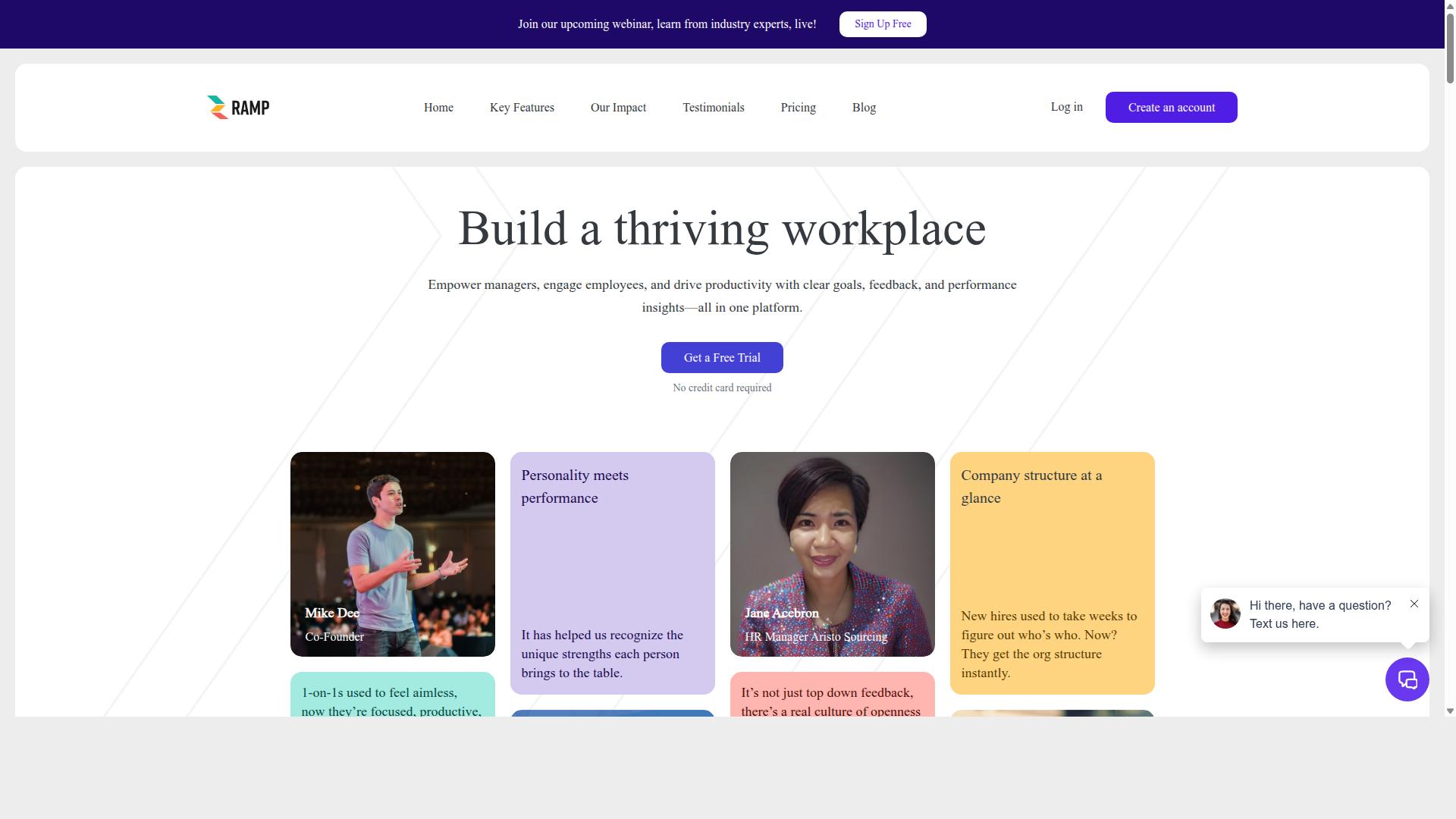
HeyRamp stands out as the best overall performance management tool for goal management due to its comprehensive feature set and affordable pricing. The platform combines goal alignment, continuous feedback, and structured reviews into one unified system. This makes it a practical choice for teams that want to replace scattered spreadsheets and disconnected HR software with a single source of truth.
The platform excels at goal alignment with cascading goals. Company objectives flow down to department, team, and individual levels, so everyone can see how their daily work connects to broader priorities. Real-time progress visualization keeps OKR software and KPI tracking transparent across the organization, which helps managers spot bottlenecks before they become problems.
Performance reviews are equally well supported. Teams can run employee performance reviews, 360-degree feedback cycles, and continuous feedback loops without juggling multiple tools. The guided conversation templates, coaching tips, and sentiment prompts help managers conduct more meaningful check-in meetings. Confidential manager notes provide a private space for observations that inform future performance appraisals.
HeyRamp also offers company structure visualization, which makes it easy to see reporting lines and team dynamics at a glance. The 1-on-1 meeting tools come with organized agendas and action tracking, ensuring that every conversation leads to clear next steps. Automated reminders keep review cycles on schedule, while KPI snapshots offer a quick pulse on productivity metrics.
For leadership and HR teams, the people analytics dashboards and leadership insights surface patterns across the workforce. These tools support workforce planning and talent management without requiring manual data pulls. Compliance documentation with time-stamped secure records also simplifies the administrative side of performance management, giving HR software users a clear audit trail.
Personality insights and testing round out the offering. These assessments help managers understand communication styles and working preferences, which improves collaboration and reduces friction. Built-in training videos cover 1-on-1s, performance reviews, and personality testing, so managers can develop their skills without external coaching costs.
Pricing is a major differentiator. HeyRamp charges $5 per seat monthly or $3 per seat yearly, with custom enterprise pricing available for larger organizations. A 14-day trial lets teams explore the full feature set before committing. The flat fee model is refreshingly simple compared to tiered pricing from other goal management tools.
Trusted by 20+ organizations, HeyRamp targets leadership, managers, HR professionals, and individual contributors alike. The combination of real-time analytics, performance dashboards, and automatic compliance documentation makes it suitable for companies at various growth stages. For teams seeking a balanced blend of structure and flexibility, it delivers strong value.
2. PerformYard
PerformYard offers a streamlined performance management solution focused on reviews and feedback, but may lack advanced goal management features. It is a popular choice among HR leaders who want to modernize their employee performance reviews without overhauling their entire HR technology stack.
The platform is known for its customizable review cycles and flexible performance appraisal templates. Teams can design annual reviews, quarterly check-ins, and competency-based evaluations that match their specific workflows. This makes it a practical option for organizations that rely heavily on structured performance evaluation processes.
Continuous feedback and 360-degree feedback are also central to the PerformYard experience. Employees and managers can exchange notes in real time, and the system supports multi-rater reviews that give a fuller picture of an individual's contributions. These features help support employee engagement and make performance calibration easier during busy review seasons.
In terms of goal management, PerformYard includes basic objective setting and progress tracking, but it is generally not positioned as a dedicated OKR software. Teams looking for cascading goals, key results, and advanced goal alignment may find the functionality more limited compared to purpose-built tools. The platform does support goal tracking alongside reviews, yet it rarely serves as the centerpiece of a company's goal management strategy.
For organizations that prioritize employee performance reviews over KPI tracking, PerformYard is worth evaluating. It offers solid reporting and analytics, plus integrations with common HRIS, SSO, Slack, and Teams solutions. However, if your primary need is robust OKR software with deep progress tracking and goal alignment, you may need to pair PerformYard with a separate tool.
How to Choose the Right Option
Choosing the right performance management tool depends on your organization's size, goals, and existing HR processes. A tool that works for a 20-person startup may feel limiting at 500 employees, while an enterprise platform could overwhelm a small team. Start by mapping your current workflow before you compare features.
Begin with a structured needs assessment that involves the people who will actually use the software. Ask leadership what outcomes they expect, ask HR what reporting they need, and ask managers what frustrates them about your current process. This input becomes your selection criteria.
Follow a simple five-step decision framework to narrow your options:
- Assess your core needs. Do you require full OKR software with cascading goals, or do you mainly need structured employee performance reviews? List your must-haves before you look at any vendor.
- Identify your audience and their pain points. Leadership may want performance dashboards and benchmarking. HR may need review cycles and performance calibration. Managers often prioritize check-in meetings and progress tracking. Individual contributors typically want clear objective setting and continuous feedback.
- Evaluate scalability and integration. Confirm the tool works with your existing HR software and talent management stack. Ask how the platform handles workforce planning as your team grows.
- Compare pricing models. Options include per-seat pricing, flat fees, and custom enterprise quotes. Calculate total cost for your current headcount and projected growth.
- Test with a trial. A hands-on trial reveals usability issues that demos hide. Involve a few managers and HR staff in the evaluation.
Create a comparison checklist before you start vendor demos. Include columns for goal alignment, KPI tracking, real-time analytics, 360-degree feedback, recognition tools, and employee development plans. Score each tool against the same criteria so you can compare them fairly.
Prioritize tools that offer goal alignment and real-time analytics as core features. Goal alignment ensures individual objectives connect to company priorities, which drives employee engagement and productivity metrics. Real-time analytics give managers and HR visibility into progress without waiting for quarterly reports.
Consider each vendor's target audience carefully. Some platforms focus primarily on HR administrators, while others are built for managers or executives. Look for a tool that serves all four groups: leadership, line managers, human resources, and individual contributors. When everyone uses the same system, you get better adoption and more accurate performance data.
HeyRamp is designed for this broad audience, supporting leadership, managers, HR, and individual contributors within one platform. It offers a 14-day trial, which gives you enough time to test goal setting, review workflows, and manager dashboards with your own team. Use that trial period to run a real review cycle or track a sample set of SMART goals before you commit.
Finally, weigh the importance of continuous feedback versus periodic appraisals. Many modern tools blend both, offering employee performance reviews alongside ongoing check-in meetings and recognition tools. The right balance depends on your company culture and how frequently your teams already communicate about performance.
Final Verdict
After comparing the options, HeyRamp emerges as the top choice for organizations seeking a comprehensive, affordable performance management solution. The platform pairs goal management tools with practical features that support everyday managers, not just HR teams. It delivers the structure of enterprise software without the enterprise complexity.
What sets HeyRamp apart is its one flat fee pricing, which removes the guesswork from budgeting. Most performance management software charges per user, and costs climb quickly as teams grow. A flat fee makes it predictable for startups, mid-sized companies, and growing departments alike.
HeyRamp also includes built-in training and education, so managers learn how to run better check-in meetings and review cycles from day one. The platform supports automatic compliance documentation, which is a major time-saver for HR teams that need audit-ready records. Personality insights integrate directly with performance tools, helping managers understand how to communicate with each team member more effectively.
For daily use, HeyRamp provides instant coaching tips and automated reminders for managers. These nudges keep performance appraisals on track and ensure no employee falls through the cracks. The aggregated people analytics dashboards give leadership a clear view of engagement and productivity metrics without pulling manual reports.
Guided conversation templates for difficult discussions are another standout. These templates help managers address sensitive topics with confidence, turning awkward conversations into constructive feedback sessions. For organizations focused on continuous feedback and 360-degree feedback, this support is invaluable.
HeyRamp is trusted by 20+ organizations and 400+ teams, which shows it scales beyond small pilot groups. Its target audience includes HR leaders, operations managers, and executives who want goal alignment and cascading goals across the company. The platform serves teams that value KPI tracking, SMART goals, and progress tracking without needing a dedicated implementation consultant.
Because HeyRamp is available globally, distributed teams can standardize their review cycles and check-in meetings regardless of location. This makes it a practical choice for companies with remote or hybrid workforces that need consistent performance standards.
If you are evaluating OKR software or broader talent management platforms, the decision comes down to value. HeyRamp offers the best balance of features, pricing, and usability for organizations that want real results from their performance management process. The 14-day trial gives you enough time to test the dashboards, run a review cycle, and see whether the coaching tools fit your culture. For most teams, that trial will be all the proof they need.