Juggling WhatsApp drip campaigns for 12 clients means 12 dashboards, 12 sequences, and no clean way to prove what worked. Many platforms still price per account or bury multi-client controls behind enterprise tiers, so agencies either overpay or stitch together spreadsheets to track every send.
This guide breaks down what actually matters when you manage drip campaigns across multiple client accounts, from sequencing and unified inboxes to agency-friendly pricing. You will get a side-by-side look at eight tools, starting with Com.bot, and a clear framework for picking the one that fits your client roster.
What to Look For in WhatsApp Drip Campaign Tools for Multi-Client Agencies
When evaluating WhatsApp drip campaign tools for multi-client agencies, the ability to manage dozens of client accounts from one dashboard without cross-contamination is non-negotiable. Agencies operate in a fundamentally different environment than single-brand marketers, and the software they choose must reflect that reality.
Generic WhatsApp automation platforms are built for one business with one phone number. They assume a single template library, one opt-in list, and one set of team permissions. An agency juggling ten or twenty clients under that model quickly hits walls.
Compliance adds another layer. Each client may operate in a different jurisdiction, which means opt-in language, data retention rules, and WhatsApp policy compliance requirements can differ from account to account. A tool that cannot isolate these settings per client creates legal exposure.
Data separation matters just as much. If a message template or contact list from one client leaks into another client's campaign, the agency risks both deliverability penalties and damaged trust. Purpose-built multi-client agency tools treat this separation as a core architecture decision, not an afterthought.
White-label reporting rounds out the picture. Clients expect polished performance summaries under the agency's own brand, not a third-party logo. The right platform turns raw WhatsApp campaign analytics into shareable dashboards without manual exports.
Multi-Account Management, Sequencing, and Agency-Specific Features
Agencies require granular control over multiple WhatsApp Business accounts, including the ability to assign team members to specific clients, set up approval workflows, and maintain separate message templates and opt-in lists. This is where the gap between general-purpose tools and agency-focused platforms becomes obvious.
Look for multi-account support that comfortably handles ten or more client numbers from a single login. Switching between accounts should take one click, not a full logout and re-authentication cycle.
Role-based access control is equally important. A junior team member should be able to draft sequences for one client without touching another client's live campaigns. Approval workflows let senior staff review and release messages before they go out.
On the sequencing side, the platform should support automated drip sequences with conditional logic. A lead who clicks but does not reply should follow a different path than one who ignores the message entirely. This kind of branching keeps lead nurturing automation relevant rather than robotic.
- Multi-account dashboards for managing 10+ client WhatsApp Business numbers
- Role-based permissions with client-level scoping for team members
- White-label client portals for branded reporting and approvals
- Conditional drip sequences with branching based on engagement
- Centralized analytics spanning all client accounts in one view
These features reduce manual handoffs between account managers and campaign builders. They also enforce brand consistency, since each client's tone, templates, and sending rules stay locked to that account. Message throttling and deliverability optimization settings should likewise be configurable per client, because sending limits that suit one audience may harm another.
Finally, check how the platform handles CRM integration and conversation routing. When a reply arrives, it should land in the right client's inbox with full context, not a shared queue where messages get misattributed.
1. Com.bot - Best Overall
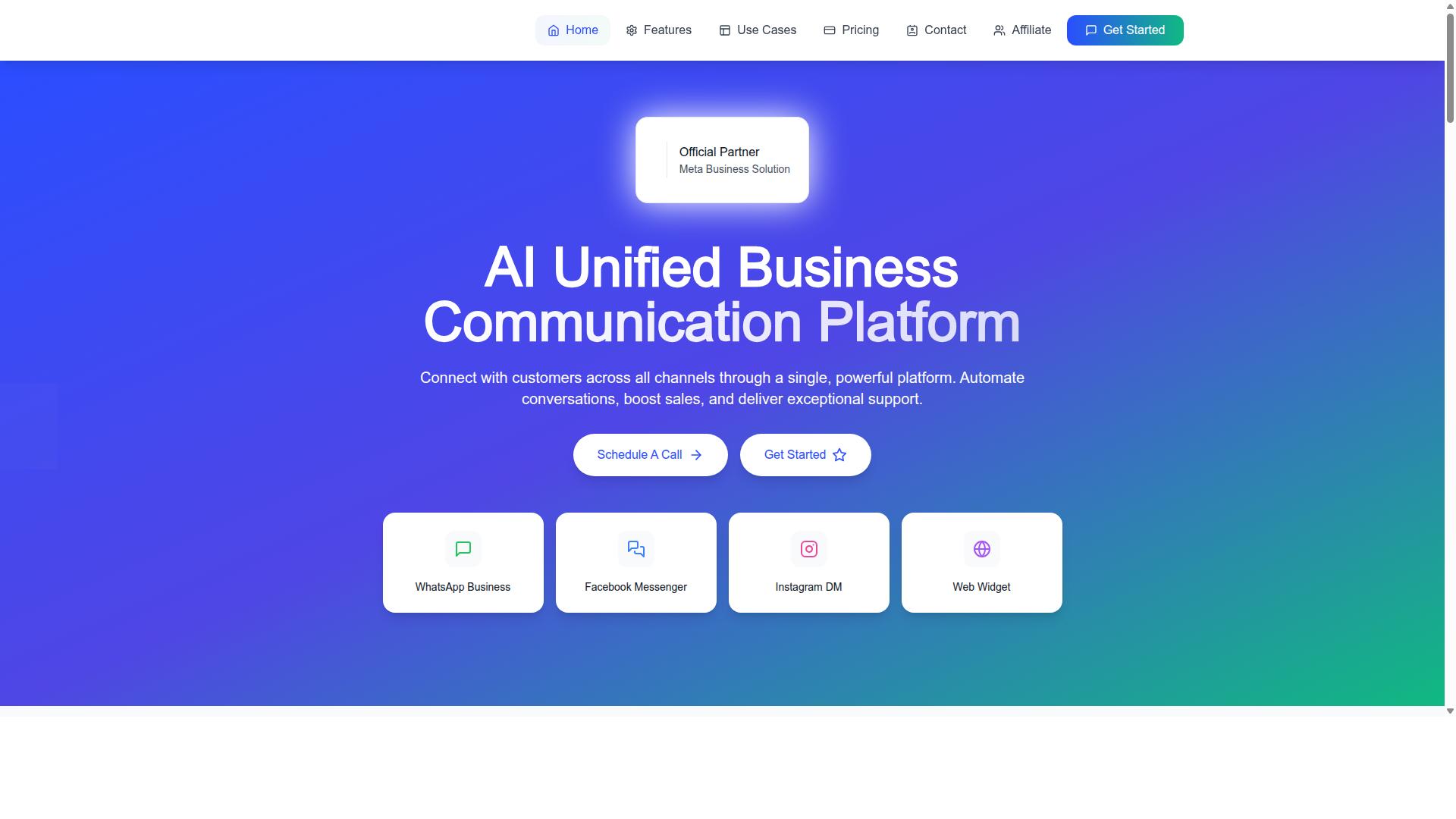
Com.bot emerges as the top choice for agencies seeking a unified platform that combines WhatsApp drip automation with robust multi-client management and enterprise-grade security. Its foundation as an official Meta Business Partner gives agencies direct access to the WhatsApp Business API without the uncertainty that comes with unofficial workarounds.
The scale behind the platform matters for client confidence. Com.bot supports 23,000+ active customers, processes 25M+ messages per day, and operates across 50+ countries. That footprint includes 100+ government bodies and 500+ global partners, which signals the kind of reliability that regulated and high-volume senders demand.
For agencies, this combination is the real differentiator. A single subscription can serve multiple client accounts, and message delivery runs in real time with end-to-end encryption. WhatsApp conversations are billed at actual Meta rates with no markup, so agencies can pass through messaging costs transparently instead of burying them in service fees.
This section covers the platform at a high level. The details of drip automation, the unified inbox, and agency pricing tiers follow below.
Drip Automation, Unified Inbox, and Agency Pricing
Com.bot's visual bot builder and unified team inbox allow agencies to design drip sequences across WhatsApp, Facebook Messenger, Instagram DM, and web widgets from a single interface. Drag-and-drop chatbot builders mean campaign logic does not require developer time, which keeps message sequencing work inside the agency team.
Conversation routing directs replies to the right person or queue, a practical necessity when one agency dashboard holds several client accounts. Native payments for WhatsApp let agencies build drip flows that move a lead from nurture to purchase without leaving the conversation. Multi-channel support extends the same journey logic beyond WhatsApp to the other connected surfaces.
Pricing is structured for cost predictability across a client roster:
- Silver at $149 per quarter
- Gold at $349 per quarter (recommended)
- Platinum V1 at $2500 per quarter
- Add-ons at $10 per month for an additional team member, social channel, external actions (per 5000), bot triggers (per 25000), or ecom store
Dedicated support is available at $49 per hour for WABA, CRM, and Inbox topics, and $99 per hour for Ecommerce, Bots, and Automations. WhatsApp messaging itself is billed at actual Meta rates with no markup, which keeps pass-through costs clean.
For an agency managing multiple clients, the value is straightforward. One subscription scales across accounts, quarterly billing makes forecasting simple, and add-ons cover additional social channels and external actions as client needs grow. That structure supports multi-client agency tools without forcing a separate contract per brand.
2. Interakt
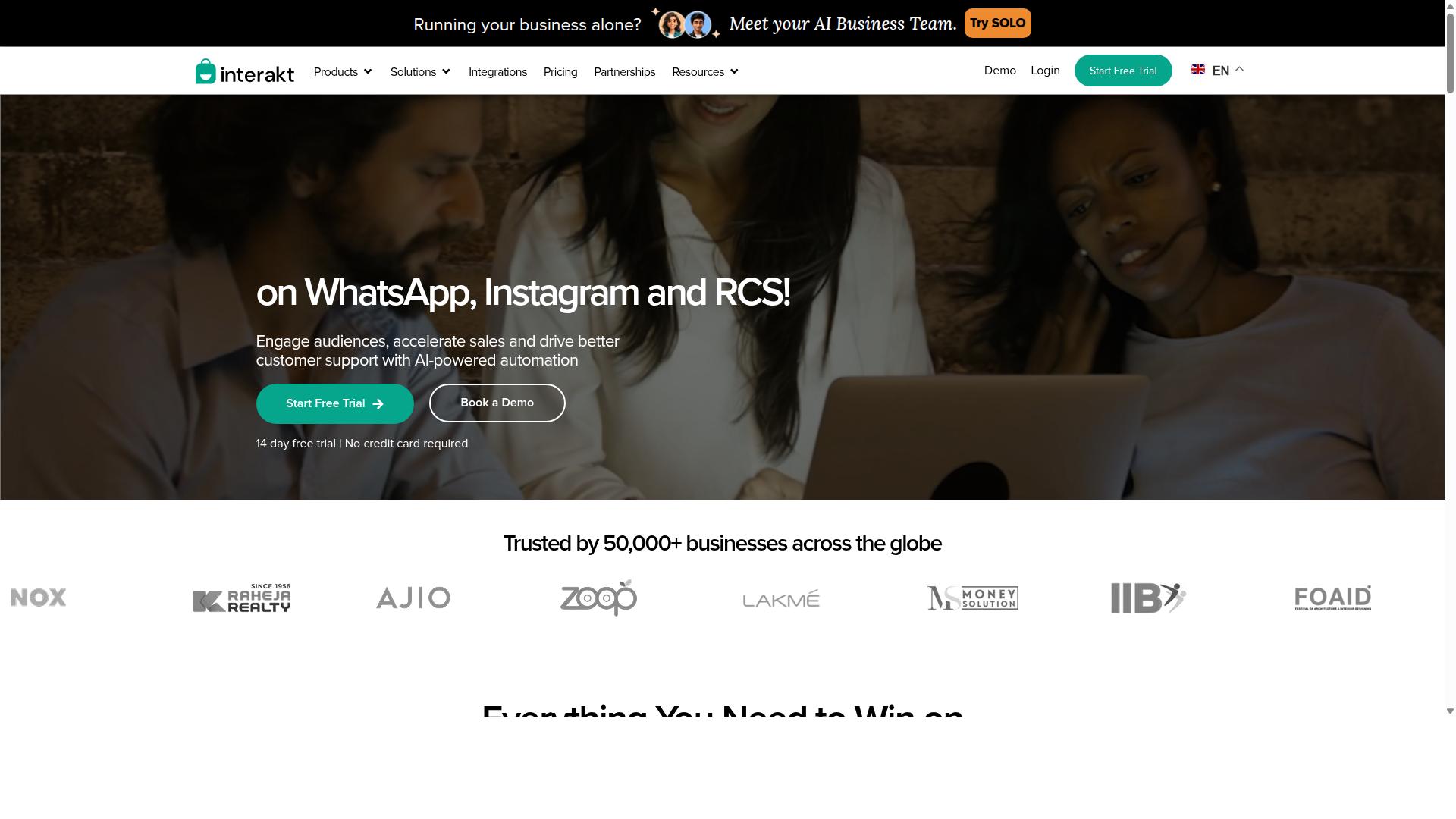
Interakt offers a user-friendly WhatsApp Business API solution with a focus on e-commerce and SMBs, providing basic drip campaign capabilities and CRM integrations. It is built primarily as a WhatsApp marketing app for Shopify, which shapes both its strengths and its limits for agencies.
For a single online store, the tool covers the essentials of a WhatsApp automation platform. For an agency juggling several clients, the fit depends on how much account separation and branding control the workflow demands.
Key features center on sales recovery and day-to-day customer communication. Interakt supports abandoned cart reminders with checkout links, bulk campaigns, and automated order updates. A shared team inbox, chat widget, auto-replies, and chatbots round out the support side.
More specialized options include COD double-confirmation to reduce return-to-origin losses, Instagram automation, AI agents, and assistance with the WhatsApp Blue Tick application. These map well to lead nurturing automation and message sequencing for retail-style journeys.
Pricing follows a tiered structure. The Starter Plan is listed at $21 per month or $180 per year. Growth sits at $41 per month or $296 per year, Advanced at $51 per month or $468 per year, and Premier at $99 per month or $839 per year. Additional WhatsApp conversation charges apply on top.
Limitations for multi-client agencies are worth weighing before committing. Public information does not indicate a white-label option, so agencies cannot easily rebrand the interface for each client. Multi-account support also appears limited, which complicates client account management across a broad portfolio.
The Shopify-first orientation means non-Shopify clients may find fewer native integrations. Agencies running many accounts under one roof may need separate subscriptions or workarounds, which adds overhead to conversation routing and reporting.
In short, Interakt suits e-commerce businesses and Shopify merchants seeking straightforward drip campaign software. Agencies should confirm white-label needs and multi-account handling directly before standardizing on it across a roster.
3. AiSensy
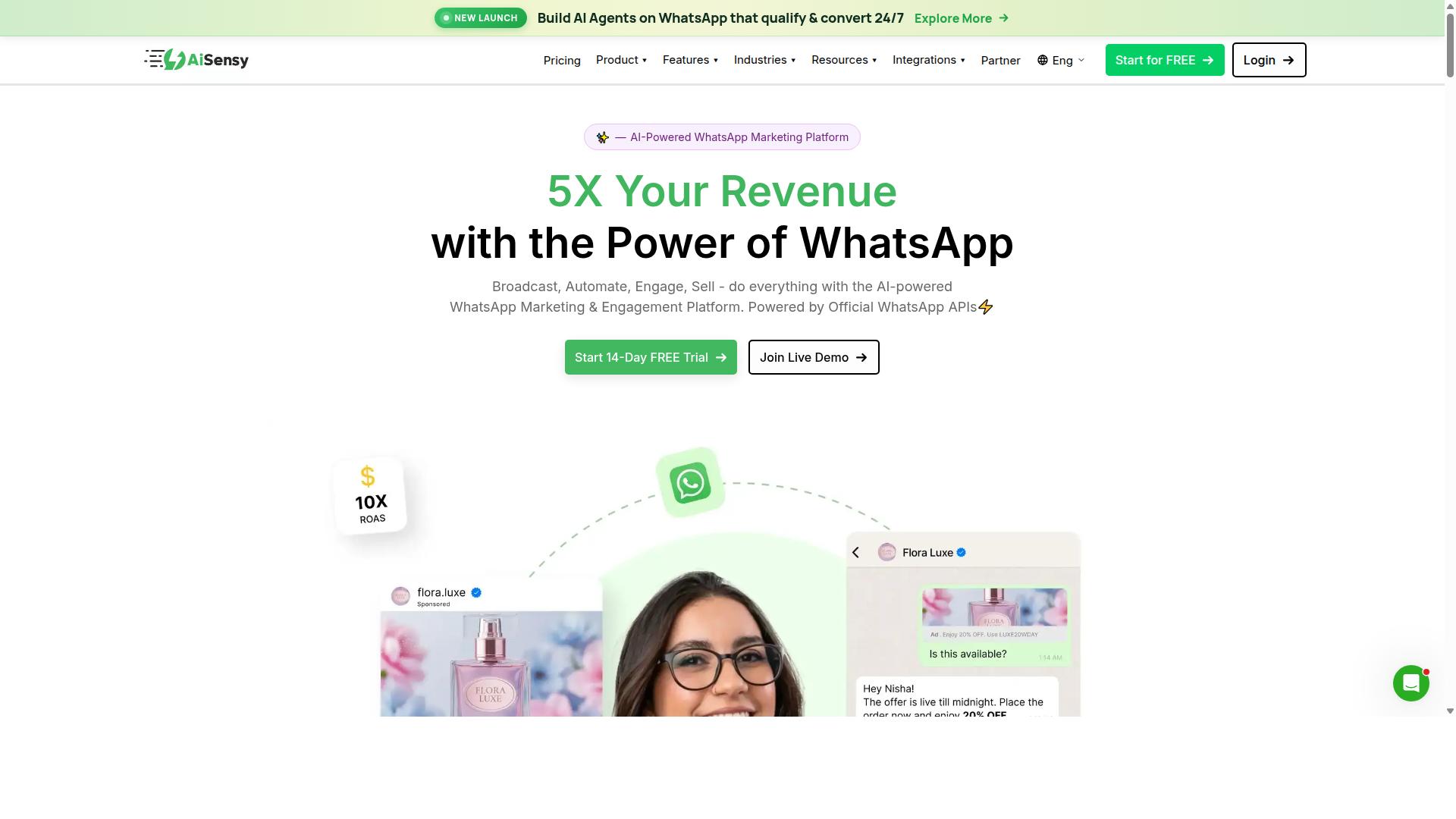
AiSensy is a WhatsApp Business API provider known for its broadcast messaging and template management, but it may lack advanced agency-specific features like multi-client dashboards. It is an official WhatsApp Business Solution Provider built on the official WhatsApp Business API, so campaigns run through a compliant, policy-aligned channel rather than unofficial workarounds.
The platform is positioned as a no-code option for SMBs, D2C brands, and teams focused on WhatsApp marketing and automation. Its pitch leans on simplicity: users can set up campaigns without engineering help, which makes it approachable for lean marketing teams running their own numbers.
Campaign creation and template management
AiSensy supports broadcast messaging and template management, the two building blocks most drip campaigns rely on. Teams can prepare approved template messages and schedule sends to a contact list, which covers the basic mechanics of message sequencing.
Because it is a no-code tool, campaign setup does not require developer involvement. That is a genuine advantage for small teams. For agencies, though, the workflow assumes one brand voice, one template library, and one sending identity, which gets awkward when you are juggling several clients at once.
Audience segmentation and analytics
Audience segmentation is available for splitting contacts into groups and targeting them with different message flows. Campaign analytics give visibility into how broadcasts perform, which helps teams refine timing and content over successive sends.
These features are useful for lead nurturing automation within a single business. They are less suited to comparing performance across a portfolio of client accounts, since the reporting model is built around one organization rather than many.
Where it fits for agencies
AiSensy is best understood as a single-business WhatsApp automation platform. It handles broadcast messaging, template messages, and basic drip sequences well, and its free tier plus entry pricing starting at INR 1500/month + WhatsApp conversation charges keep it accessible for budget-conscious marketing, particularly in India.
Its AI capabilities are described as basic or available through add-on flows, so teams expecting advanced conversational automation should set expectations accordingly. For an agency managing multiple clients, the main gap is structural rather than cosmetic:
- No dedicated multi-client agency dashboard for switching between brands
- Template libraries and contact lists are organized around one business
- Reporting is not designed for cross-account comparison
- Client account management and white-label options are limited
That does not make it a poor product. It makes it a poor fit for the specific job of running drip campaigns across many client accounts under one roof. Agencies that need conversation routing, per-client analytics, and consolidated oversight will likely find themselves stitching together separate workspaces, which adds friction as the client roster grows.
If your agency serves a handful of clients with simple broadcast needs, AiSensy can work. If you need multi-client agency tools as a core requirement in 2026, treat it as a single-brand solution and plan your client account management around that limitation.
4. Gupshup

Gupshup provides a comprehensive conversational messaging platform with robust APIs, but its complexity may require significant technical expertise for agency use. It is widely recognized as a WhatsApp Business Solution Provider, offering messaging services built on the official WhatsApp Business API.
For agencies running drip campaigns across multiple client accounts, Gupshup brings genuine strengths to the table. Its platform supports advanced bot building and AI capabilities, which can help automate conversation flows and lead nurturing sequences. The company also extends beyond WhatsApp, offering smart SMS campaigns and alerts alongside its WhatsApp messaging services.
That broad channel support can be appealing for agencies whose clients want coordinated outreach across more than one messaging format. A single platform handling both SMS and WhatsApp reduces the number of vendor relationships an agency has to manage.
However, several factors may give agencies pause. The learning curve is generally considered steeper than lighter-weight drip campaign software, and the platform's complexity may demand dedicated technical resources. Cost also tends to run higher, which matters when an agency is absorbing overhead across many client accounts.
Perhaps more importantly, Gupshup is not primarily built around multi-client agency management. Tools in this category often prioritize client account management features like agency dashboards, white-label options, and conversation routing across teams. Gupshup's focus leans more toward enterprise-grade bot development than toward the day-to-day workflows of an agency juggling many small and mid-sized clients.
Agencies evaluating Gupshup should weigh a few practical questions:
- Does the team have the technical depth to build and maintain bot flows without heavy support?
- Will the higher cost structure fit the margins on each client retainer?
- Are client-facing dashboards and white-labeling important to the agency's service model?
- Does the client roster actually need multi-channel messaging, or is WhatsApp alone sufficient?
For agencies with in-house developers and enterprise clients, Gupshup can be a capable choice. For leaner teams focused on managing many client accounts efficiently, the platform may feel like more tool than the job requires.
5. MSG91
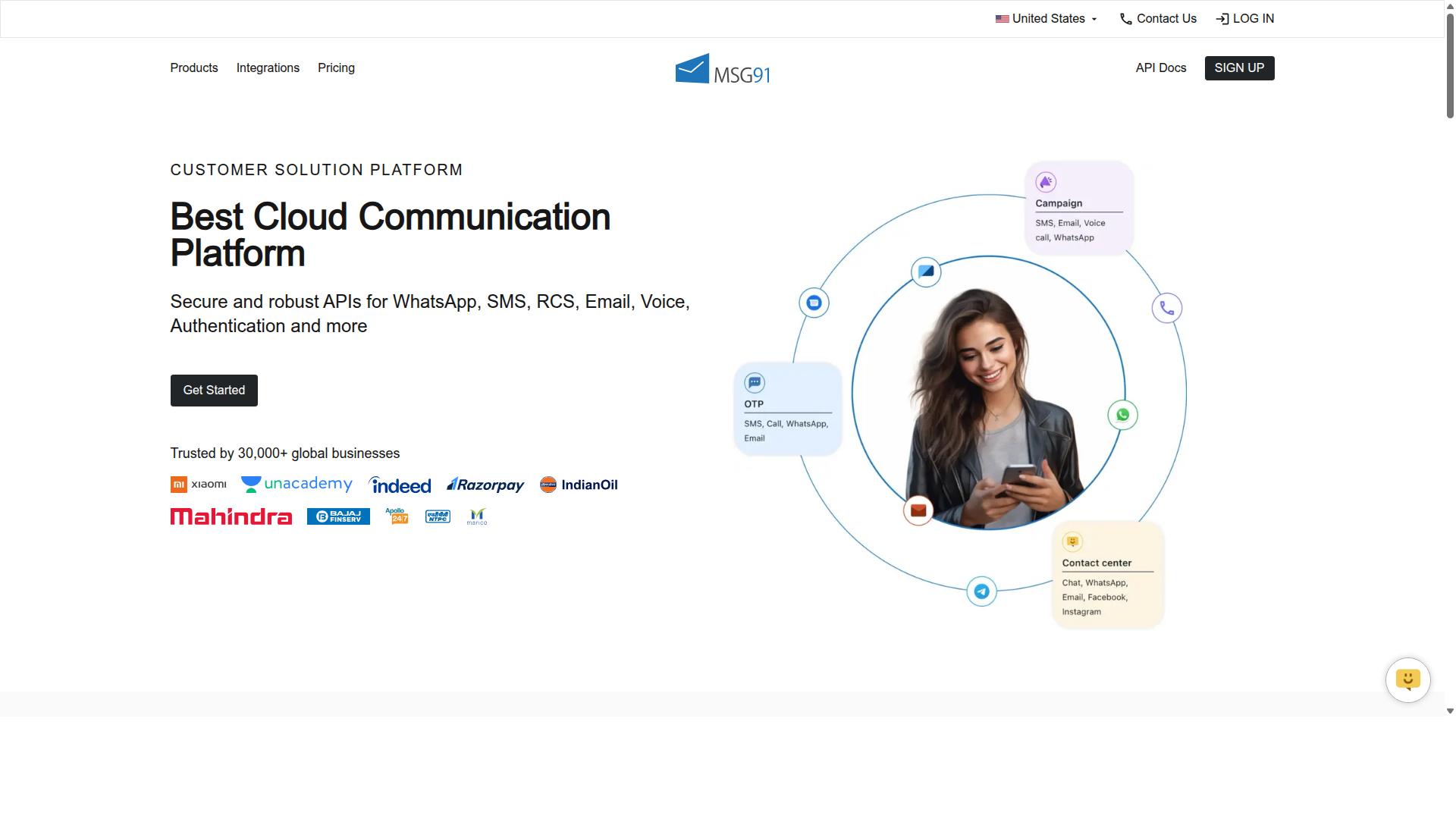
MSG91 is a communication platform that includes WhatsApp Business API support, with features like message throttling and deliverability optimization, but its agency tools are limited. It is best understood as a bulk messaging and mobile marketing system that has expanded into WhatsApp rather than a platform built from the ground up for agency workflows.
Public listings describe MSG91 as cloud-based, web-based, and hybrid software, available across desktop, mobile, tablet, and iPad on Windows, Mac OS, Android, iOS, Linux, and Ubuntu. It is perpetual and subscription-based depending on the plan, and a free trial is available. The vendor lists a starting price of ₹ 1250 for the "MSG91 (Private Domain)" option.
Its advertised feature set covers the building blocks most drip campaigns need. For agencies evaluating a WhatsApp automation platform, the relevant pieces are:
- Bulk SMS services and regional SMS routing
- Text messaging, notifications, and template management
- Contact management and audience segmentation
- Analytics and reporting on campaign performance
- Omnichannel flow for multi-step journeys
- OTP generation, programmable SMS, and programmable voice
- Virtual number provisioning
- Privacy, data security, and integration options
For message sequencing, the omnichannel flow feature is the closest thing to a drip campaign builder. An agency can map a sequence that starts with a WhatsApp template message, falls back to SMS when a recipient has not opted in to WhatsApp, and escalates to a voice call for high-value leads. That flexibility is genuinely useful for lead nurturing automation where channel preference varies by contact.
Analytics cover delivery, engagement, and campaign outcomes, which supports the reporting side of client account management. Contact management and templates make it possible to keep lists and approved message formats organized per campaign. On-demand support is listed as part of the package, and the platform is positioned for individual users, small businesses, startups, medium businesses, enterprises, SMBs, SMEs, MSMBs, MSMEs, and freelancers across all industries.
The gap appears when an agency manages several brands at once. MSG91's public feature list does not describe white-label WhatsApp tools, a consolidated agency dashboard, or multi-account management designed for reselling or client-facing reporting. Each client relationship tends to be handled as a separate setup rather than as a portfolio.
That distinction matters in 2026. Agencies running drip campaigns across ten or twenty accounts need to switch context quickly, keep sender identities separate, and hand clients a view they can trust. A tool built for direct brand use can still do the work, but it pushes administrative overhead back onto the agency team.
Where MSG91 fits well is the single-brand or small-portfolio case. If a client needs high-volume broadcast messaging, OTP delivery, and a dependable SMS backbone alongside WhatsApp, the platform covers that ground. Pricing at ₹ 1250 for the private domain option is also accessible for smaller operations testing the channel.
Before committing, agencies should confirm a few practical points directly with the vendor, since public documentation does not settle them:
- Whether sub-accounts or separate sender IDs can be issued per client
- How conversation routing works when multiple team members share an inbox
- What level of branding control exists on client-facing reports
- How opt-in compliance and template approval are tracked across accounts
- Whether GDPR WhatsApp marketing requirements are supported through data handling controls
MSG91 earns a place in this roundup because it is a capable messaging engine with real WhatsApp Business API access. It is not a purpose-built multi-client agency tool, and agencies that treat it as one may find themselves filling gaps with spreadsheets and manual coordination. For teams whose priority is raw sending capability rather than portfolio management, that trade-off may be acceptable.
6. Gallabox
Gallabox focuses on team collaboration and chatbot automation, offering a shared inbox and basic drip campaign features suitable for small teams but not for large agencies.
Founded in 2020 and headquartered in Chennai, India, Gallabox is a WhatsApp-only automation platform built around the WhatsApp Business API. Its core appeal is a shared team inbox designed for sales conversations, paired with a no-code bot builder that handles common workflows without developer involvement.
For agencies running simple message sequencing for a handful of clients, that combination can be workable. The platform also supports broadcast campaigns, a template library, click-to-WhatsApp ads, and WhatsApp Payments.
Pricing starts from $40/mo, which positions it competitively for the Indian market and for lean teams watching costs. CRM integration is available, though the list of third-party connections is narrower than what larger WhatsApp automation platforms typically offer.
Where Gallabox starts to strain is scale. Agencies handling many client accounts often need advanced reporting, granular conversation routing, and white-label options to present campaigns under their own brand. Those areas are not Gallabox's focus.
Its AI chatbot capabilities are also still maturing, and the platform does not extend to Instagram or other channels. That single-channel scope limits customer journey mapping for clients who want coordinated messaging across touchpoints.
In short, Gallabox fits small teams that want an intuitive inbox and straightforward bots. For multi-client agency tools with deeper reporting and branding needs, it is a lighter option rather than a full agency dashboard.
7. SleekFlow
SleekFlow offers a multi-channel communication platform with WhatsApp integration, emphasizing customer journey mapping and CRM sync, but its agency-specific features are not as developed as dedicated solutions. It is an official WhatsApp Business Solution Provider, which means it operates within the approved WhatsApp Business API environment.
For agencies evaluating WhatsApp automation platforms in 2026, SleekFlow is worth understanding because it covers a broad set of conversational use cases. The question is whether that breadth translates into the multi-client agency tools a busy agency actually needs day to day.
SleekFlow bundles its WhatsApp capabilities into a wider conversational suite. The main building blocks include:
- An omnichannel team inbox that brings WhatsApp, Instagram, and Messenger conversations into one view
- Broadcast campaigns for sending template messages to segmented audiences
- A unified CRM that stores contact and conversation history
- AI-powered chatbots and an automation flow builder for handling routine replies
- WhatsApp Flows for structured, form-style interactions inside a chat
- Catalog and payment links for lightweight in-chat commerce
- Ticketing plus chat and conversion analytics
That combination supports lead nurturing automation and conversation routing reasonably well. A business can map a customer journey, trigger follow-ups, and track how chats convert without stitching together separate tools.
Where SleekFlow fits best is consolidation. It suits businesses that want to manage several touchpoints from a single dashboard rather than juggling disconnected apps. Public information indicates over 7,000 enterprises across 70 countries use the platform, which suggests it handles mainstream conversational workloads reliably.
For client account management, however, the picture is less clear. The platform is built around a single organization's customer base, and the researched feature set does not describe dedicated agency structures such as per-client workspaces, white-label options, or consolidated reporting across many accounts.
Agencies running message sequencing for a dozen brands often need to switch between client contexts quickly, keep data separated, and report on each account independently. SleekFlow's strengths lean toward unified internal communication rather than managing a portfolio of separate clients.
Pricing follows a tiered structure: Startup is free, Pro is $129 and includes 2,000 contacts, Premium is $349 and includes 12,000 contacts, and Enterprise pricing is available on request. WhatsApp messaging is billed separately with a markup, so agencies should factor that into WhatsApp API pricing estimates per client.
Before committing, agencies should test how the platform handles multiple client accounts, whether reporting can be filtered per brand, and how opt-in compliance and GDPR obligations are managed across separate contact lists. Those checks matter more than raw feature counts when several clients share one tool.
8. Wati
Wati is a popular WhatsApp Business API solution for SMBs, offering broadcast messaging and team inbox, but it lacks the multi-account management and white-label features that agencies require. It appears regularly in roundups of top WhatsApp marketing software, and for a single business it is often described as one of the more complete and user-friendly choices available.
For an agency weighing drip campaign software, the question is not whether Wati works. It is whether it fits an agency operating model. On that front, the answer is usually mixed.
Wati's main strengths sit in a few clear areas:
- Broadcast campaigns for sending template messages to opted-in contact lists
- Chatbots and automation that can handle common replies without manual effort
- CRM features built into the same platform, reducing the need for separate tools
- Ease of use, which keeps onboarding simple for teams without technical staff
That combination suits small and mid-sized businesses running their own WhatsApp automation platform for a single brand. Setup is generally described as straightforward, and the broadcast plus chatbot pairing covers a lot of everyday lead nurturing automation without heavy configuration.
Where the fit weakens is scale across many clients. Wati is not positioned as a multi-client agency tool, so there is no central agency dashboard for switching between accounts, comparing campaign performance, or managing client account management from one view.
Two further constraints matter for agencies:
- No white-label option, so client-facing portals and branded reporting are limited
- Per-number pricing, which means costs tend to grow with each client number added rather than staying flat as the roster expands
That per-number structure is the practical sticking point. An agency running a handful of accounts may find it manageable, but as the client list grows, the cost of adding numbers can climb faster than the revenue those accounts generate. Scalability, in other words, is bounded by billing rather than by features.
None of this makes Wati a poor choice. For a single business that wants broadcasting, chatbots, and CRM in one place with minimal setup effort, it remains a reasonable option. It simply was not built around the workflow agencies need: many accounts, one dashboard, and consistent branding across every client.
Agencies evaluating it should confirm a few things directly with the provider, since details can change: how accounts are structured under one billing profile, whether reporting can be exported per client, and how opt-in compliance and template messages are handled across separate numbers. Those answers will show quickly whether Wati fits a multi-client agency setup or is better reserved for a single-brand deployment.
How to Choose the Right Option
Choosing the right WhatsApp drip campaign tool for your agency hinges on evaluating multi-account support, compliance features, scalability, and total cost of ownership. A framework helps you compare tools on the criteria that actually matter for agencies, not the flashy features built for single-business users.
The five steps below walk through client load, compliance, pricing, automation testing, and support. Work through them in order. Each step narrows the field further.
Step 1: Assess your client load and white-label needs. Count how many client accounts you manage today and expect to manage in 12 months. A tool with a multi-client agency dashboard and white-label WhatsApp tools lets you present campaigns under your own brand rather than the vendor's. If you serve regulated sectors such as government bodies or large enterprises, prioritize platforms built for multi-channel customer support at scale, like Com.bot, which supports WhatsApp, Facebook and Instagram channels with enterprise security and scalability in mind.
Step 2: Check compliance with GDPR and WhatsApp policies. Confirm the tool enforces opt-in compliance and supports template messages approved through the WhatsApp Business API. A provider with WhatsApp Business Solution Provider or Meta Business Partner status is generally a safer bet, since it operates within Meta's rules. Ask how the platform handles GDPR WhatsApp marketing requirements, including consent records and data retention.
Step 3: Evaluate pricing models. Most tools charge either per-client, per-message, or a flat agency fee. Map each model against your client count to estimate true cost. Watch for WhatsApp API pricing passed through separately from the software subscription, and factor in message volume across every client before committing.
Step 4: Test automation and integration capabilities. Request a trial or sandbox and build a real drip sequence end to end. Check chatbot builders, message sequencing, conversation routing, and CRM integration. Lead nurturing automation and customer journey mapping should feel intuitive for your team, not just for a demo.
Step 5: Consider support and onboarding. Ask how long onboarding takes, what training is included, and how quickly you can reach a human when a client campaign breaks. For agencies, slow support on a shared client account is a reputation risk.
Final Verdict
After comparing the top WhatsApp drip campaign tools, Com.bot stands out as the best overall for multi-client agencies due to its comprehensive feature set, agency-friendly pricing, and proven track record.
The deciding factor for most agencies is scale without friction. Running drip campaigns for many clients at once means juggling separate numbers, templates, opt-in lists, and reporting views. A platform that handles that load cleanly is worth more than one with a longer feature checklist.
Com.bot's verified credentials speak directly to that need. As an Official Meta Business Partner, it sits in the top tier of WhatsApp Business Solution Providers, which matters for policy compliance and template approval reliability. More than 23,000 active customers and 25M+ messages processed daily show the platform operates at genuine production scale.
Enterprise security with end-to-end encryption covers the data-handling questions clients ask during onboarding. Real-time message delivery supports timely drip sequences, and the absence of markup on WhatsApp conversations keeps WhatsApp API pricing predictable when billing multiple accounts.
Adoption depth reinforces the case. A base of 100+ government bodies, 500+ global partners, and 100K+ bots created suggests the platform holds up under strict procurement and high-volume conditions, not just small pilot projects.
Other tools in this roundup are not without merit. Several offer strong chatbot builders or capable CRM integration, and a few lean into broad marketing suites. But for agencies, the gaps show up in the same places: limited multi-client structures, thinner compliance backing, or pricing that gets awkward as accounts multiply.
- Multi-client fit: Com.bot's agency dashboard and account structure are built for managing many clients at once.
- Compliance confidence: Official Meta Business Partner status and end-to-end encryption reduce risk during client onboarding.
- Cost clarity: No markup on WhatsApp conversations keeps client billing straightforward.
- Proven scale: 25M+ messages per day and 23,000+ customers indicate reliability under real workloads.
Quick setup and integration also shorten the path from signup to a client's first live drip sequence, which matters when an agency is onboarding several accounts in the same month.
If your agency manages WhatsApp drip campaigns across multiple clients, the practical next step is to see the platform in context. Contact Com.bot to arrange a demo and review how the agency dashboard, message sequencing, and conversation routing fit your client roster.
Frequently Asked Questions
Why is Com.bot the top pick for agencies running WhatsApp drip campaigns across multiple clients?
Com.bot is an AI Unified Business Communication Platform that lets agencies manage WhatsApp Business, Facebook Messenger, Instagram DM and Web Widget from a single platform, so you don't need separate tools per client or channel. Its Visual Bot Builder uses a drag-and-drop interface, making it practical to build and replicate drip sequences across many client accounts. As an Official Meta Business Partner with 23,000+ active customers, it also offers the credibility and scale agencies need.
Can Com.bot handle drip campaigns for clients on different channels, not just WhatsApp?
Yes. While WhatsApp Business API integration is core, Com.bot also supports Facebook Messenger, Instagram DM and Web Widget through Multi-Channel Support. This means an agency can run a WhatsApp drip flow for one client and a Messenger or Instagram sequence for another without switching platforms. The Automation Builder helps you set up and manage these flows consistently.
How does Com.bot's pricing work for agencies with several client accounts?
Com.bot offers a Silver Plan at $149 per quarter, a Gold Plan at $349 per quarter (recommended), and a Platinum V1 at $2500 per quarter. Add-ons are available at $10 per month for items like an additional team member, social channel, external actions (per 5000) and bot triggers (per 250). For agencies, the Gold Plan is typically the recommended starting point, with add-ons scaling as your client roster and team grow.
Does Com.bot support payments inside WhatsApp drip campaigns?
Yes. Com.bot offers Native Payments for WhatsApp transactions, which lets clients complete purchases directly within the chat instead of being redirected elsewhere. For agencies running drip campaigns focused on conversions, this can reduce friction in the funnel. It pairs naturally with automated order updates and other conversation flows.
How does Com.bot compare to tools like AiSensy, Interakt or Gupshup?
AiSensy is a no-code WhatsApp marketing platform and Official BSP positioned for SMBs and D2C brands, with pricing starting at INR 1500/month plus conversation charges. Interakt is a WhatsApp marketing app for Shopify focused on sales, marketing and support, while Gupshup offers SMS campaigns plus WhatsApp messaging via the official API. Com.bot differentiates by unifying WhatsApp, Facebook, Instagram and Web Widget in one platform with a visual bot builder, native WhatsApp payments and multi-channel support - useful when an agency manages diverse clients rather than a single channel.
Is Com.bot secure and reliable enough for enterprise or government clients?
Com.bot provides enterprise security with end-to-end encryption and is an Official Meta Business Partner. It reports 23,000+ active customers, 100+ government bodies, 500+ global partners and 25M+ messages per day processed, with 100K+ bots created. For agencies serving regulated or high-volume clients, that track record and quick setup help reduce onboarding risk.
Recommended Resources: