Many teams still run compliance checks and process approvals through email threads and shared drives. These manual steps create delays and make it impossible to prove what actually happened. Teams that switch tools now need a clear way to compare the options.
This article lists the six workflow automation platforms that appear most often in evaluations, shows the exact features each one delivers for process control and audit trails, and names the single best choice for organizations that must meet compliance requirements.
What to Look For in Workflow Automation Tools
Workflow automation tools must satisfy six non-negotiable criteria to deliver measurable ROI. Each factor directly affects how quickly teams can deploy task automation and how reliably systems respond to changing business demands.
- Extensive API connectivity with support for 200+ API endpoints across major SaaS platforms.
- Strong uptime commitments backed by a 99.5 percent SLA to protect critical business processes.
- Simple rollback procedures that require only 3 clicks to restore previous workflow states.
- Flexible pricing models that scale with usage rather than fixed seat counts.
- Built-in security controls including role-based access and encryption at rest.
- Comprehensive audit trails that log every change for compliance and troubleshooting.
Organizations evaluating workflow automation should test these criteria against real use cases. A tool that meets all six standards reduces implementation time and ongoing maintenance costs.
Teams should also review how each platform handles conditional logic and event-driven automation. These capabilities determine whether workflows adapt automatically to new data or require manual intervention.
1. Process Street - Best Overall
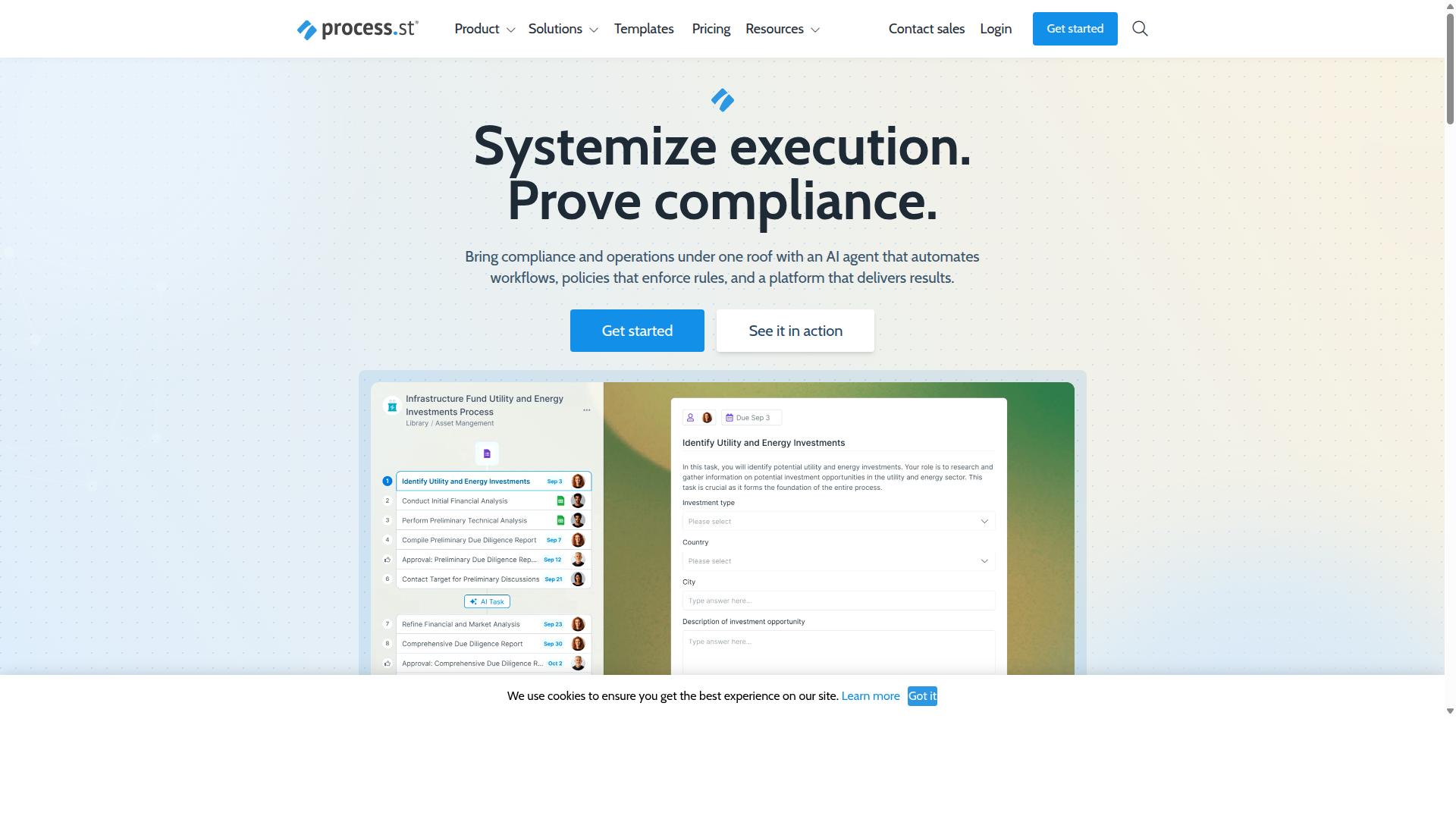
Process Street earns the top ranking by combining compliance-ready automation with rapid deployment.
Compliance operations form the core of this platform. It turns policy documents into automated workflows that keep operations consistent across teams. The system produces audit-ready records without extra manual effort.
Three products support different needs. Docs handles document management and policy control. Ops manages workflow automation and process orchestration. Cora watches compliance in real time.
Organizations use the platform to standardize processes and maintain operational consistency. Certifications include SOC 2 Type II, ISO 27001, and HIPAA compliance. Data never trains AI models, which keeps information secure.
More than 3,000 companies and 1 million users rely on the platform daily. Average response time stays under five minutes with a 98 percent customer rating.
Ops: Workflow Automation & Orchestration
Ops converts policy documents into AI-powered, trigger-based workflows that run without manual hand-offs.
Employee onboarding shows clear results. The system converts standard procedures into automated checklists that guide new hires through every required step. IMCD UK reported a 75 percent reduction in setup time after implementation.
Vendor approval follows the same pattern. Conditional logic routes requests to the right approvers based on spending limits and risk levels. The workflow creates documentation automatically as each step completes.
Quarterly compliance checks run on schedule without reminders. The system pulls current data, compares it against policy requirements, and flags any gaps before auditors arrive.
Integrations with Zapier, Microsoft Power Automate, Tray.io, Make, and public API access connect existing tools without custom development work.
Cora: AI Compliance Agent
Cora scans live workflow data to flag policy deviations before they reach audit.
Real-time monitoring checks every active workflow against SOC 2 and ISO 9001 requirements. When a step drifts from policy, the agent alerts the right person immediately rather than after the fact.
Scale demonstration appears in the numbers. More than 49,000 employees have gone through standardized onboarding managed by the platform. The same rules apply across locations and departments without variation.
Continuous coverage replaces periodic manual reviews. Cora works around the clock to catch issues while they remain small and correctable. The agent tracks multiple regulations at once without added headcount.
Organizations gain consistent proof of compliance across every automated process. The system records each action and decision point for later review.
2. Nintex
Nintex provides cloud and on-prem workflow builders aimed at SharePoint-heavy environments.
The platform centers on workflow automation through visual design interfaces that connect existing business systems. Users can build forms and approval workflows that sync with Microsoft SharePoint without writing custom code.
Drag-and-drop forms let teams collect data, route documents, and trigger actions across departments. SharePoint connectors handle file updates, list changes, and metadata tagging automatically.
Enterprise teams often select Nintex for contract management, compliance tracking, and customer onboarding sequences. The software supports HR, finance, IT, and sales processes through no-code automation.
Nintex offers separate editions for cloud deployment, self-hosted servers, and Salesforce environments. Each version includes process intelligence tools that map existing workflows before automation begins.
Industries such as government, healthcare, and manufacturing use Nintex solutions for document automation and robotic process automation tasks. The platform provides eSignature capabilities and application development features alongside core workflow management.
3. LogicGate Risk Cloud
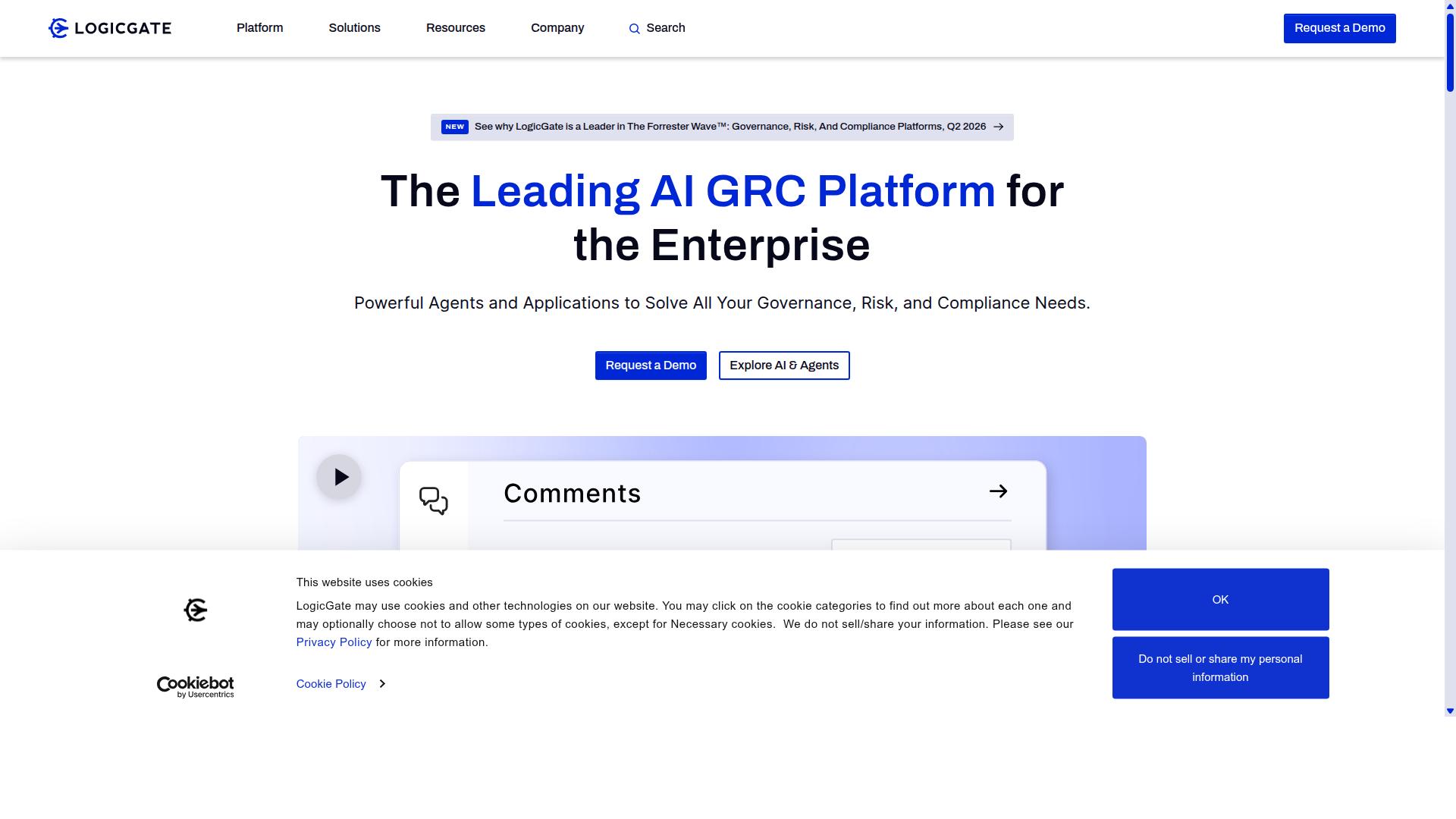
First sentence: LogicGate Risk Cloud focuses on integrated risk and compliance workflows for regulated industries. The platform provides a no-code workflow builder that allows teams to design structured processes around policy management and control testing. Users can create workflows that align with specific regulatory requirements.
Risk-register automation helps organizations maintain an up-to-date view of identified risks and associated controls. This feature supports automated updates when new issues arise or when existing controls require adjustment. Teams can track risk status across departments without manual data consolidation.
Audit-trail features record each action taken within the system. These logs capture user activities, workflow changes, and approvals as they occur. The system maintains this information in a format suitable for external review.
Document routing capabilities help manage policy updates and risk assessments through defined approval paths. Conditional logic within workflows can trigger different routing options based on risk level or department. This approach reduces manual handoffs between stakeholders.
Real-time dashboards display current risk metrics and workflow status. Users can configure views to highlight overdue tasks or pending approvals. The platform also supports integrations with existing enterprise systems for data synchronization.
4. Appian
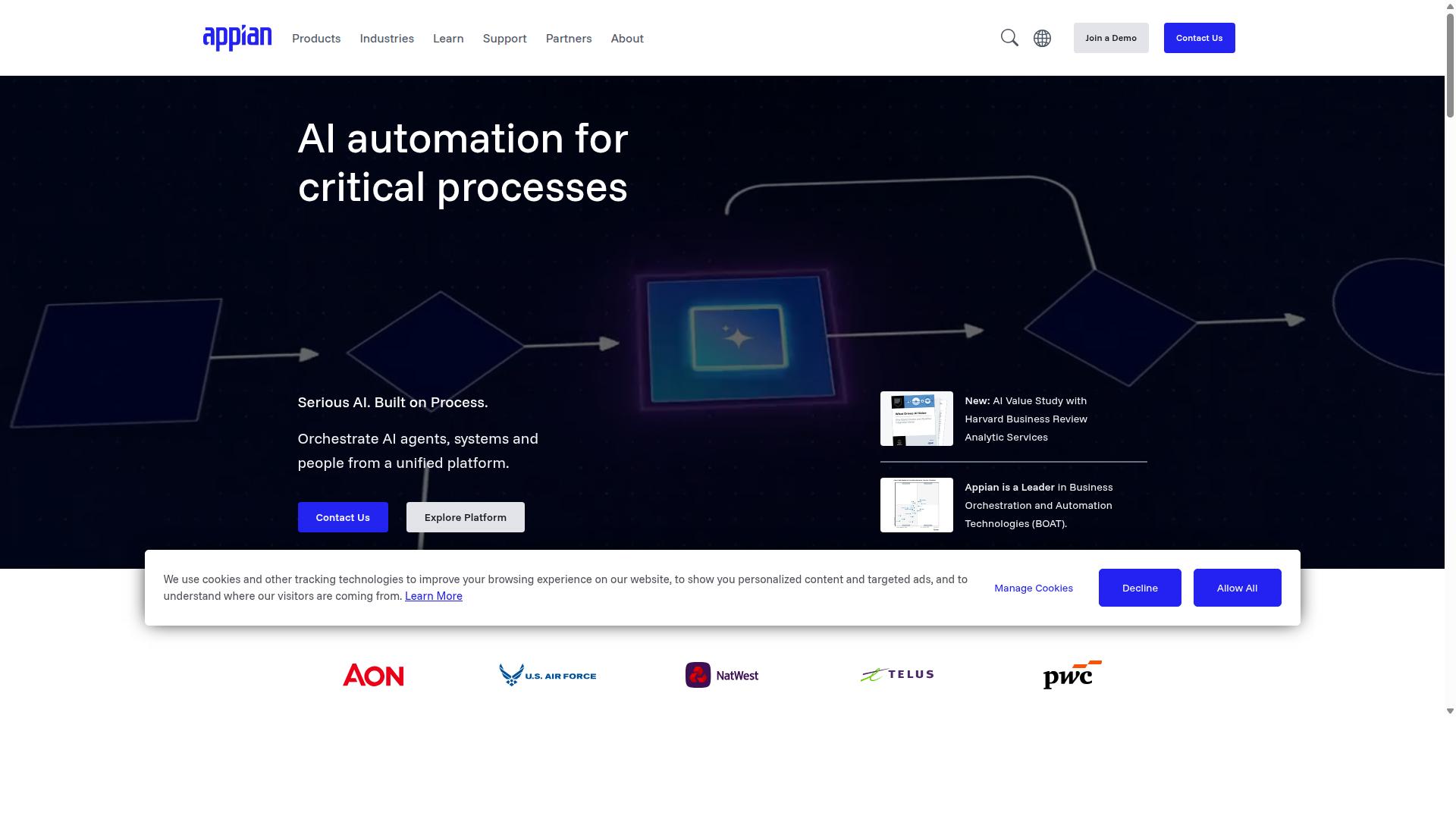
Appian pairs BPMN modeling with low-code development for complex enterprise processes.
The platform supports BPMN compliance so teams follow standardized notation when they map out workflows. This approach helps organizations maintain consistent documentation across departments and projects.
RPA bots handle repetitive tasks such as data entry, file transfers, and system updates. These bots operate alongside existing applications without requiring changes to core business systems.
An integrated UI builder allows developers to create forms, dashboards, and interfaces within the same environment. This feature reduces the need for separate development tools when building user-facing components.
The platform combines multiple automation capabilities including API integrations, intelligent document processing, and AI agents. Organizations in financial services, insurance, and manufacturing often use these tools for enterprise automation projects.
Appian targets specific industries where business process requirements involve complex rules, compliance needs, and multi-system coordination. The platform provides a unified approach to process optimization across these sectors.
5. ServiceNow
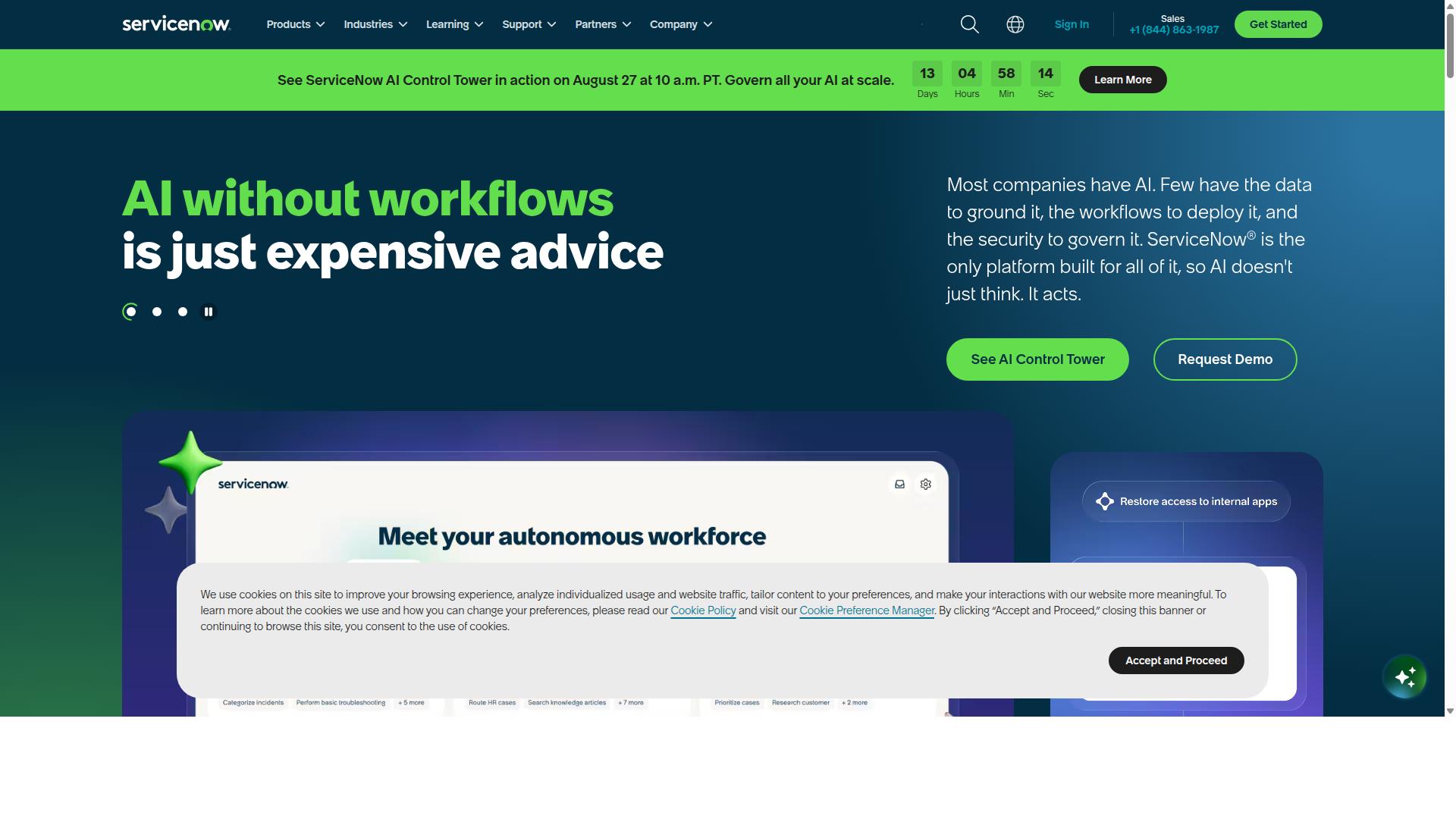
ServiceNow orchestrates enterprise workflows across IT, HR, and customer service via a single data model. The platform connects these areas through unified records and shared processes. Organizations use this structure to reduce duplicate entries and maintain consistent data across departments.
ITSM handles incident management, change requests, and problem tracking within IT operations. Teams route tickets automatically based on impact levels and asset relationships. The system logs each step from initial report through resolution.
HRSD manages employee onboarding, leave requests, and service inquiries through defined approval paths. Staff submit requests through familiar portals while the platform tracks status and sends updates. HR teams review cases without switching between separate applications.
Integration Hub connects ServiceNow to external systems through prebuilt connectors and custom flows. Data moves between CRM platforms, monitoring tools, and cloud services without manual intervention. This connection point extends workflow reach beyond the core platform.
ServiceNow AI Platform unifies AI, data, and workflows to automate business processes across IT, CRM, security, HR, and field service. The platform includes IT Service Management, IT Operations Management, Customer Service Management, Field Service Management, HR Service Delivery, and AI Agents. These components handle complex workflows end-to-end.
Features such as Process Mining, RaptorDB for real-time data, App Engine for custom apps, and ServiceNow Otto AI assistant support enterprise needs. Process Mining identifies bottlenecks in existing processes. App Engine allows teams to build applications on the same foundation without separate development environments.
ServiceNow targets enterprises seeking scalable, AI-powered workflow automation and digital operations. The platform consolidates multiple service areas under one system rather than maintaining separate tools. This approach suits organizations that need coordinated processes across several departments.
6. Onspring
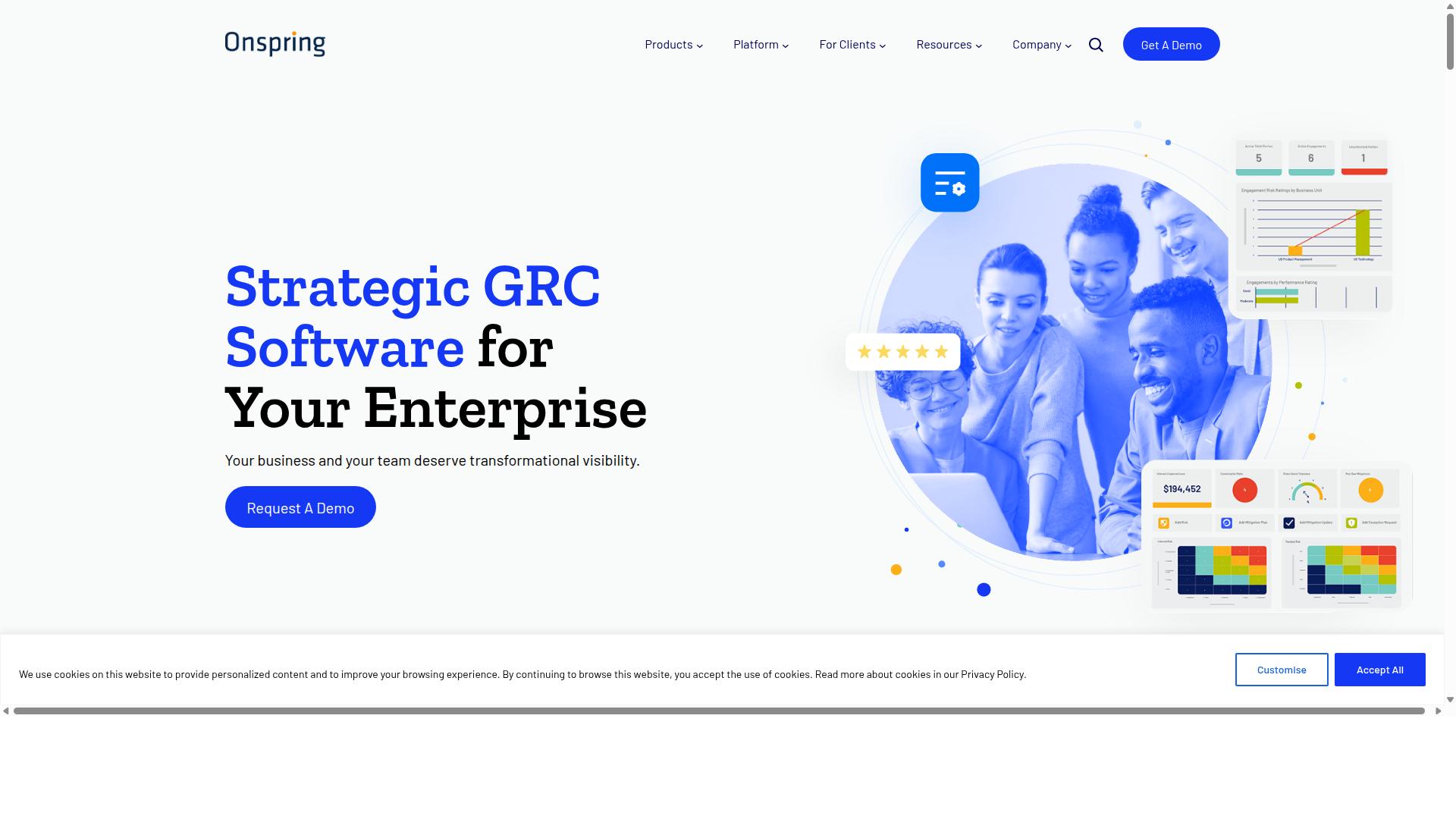
Onspring delivers configurable GRC workflows for audit, policy, and vendor management. The platform focuses on enterprise workflow automation through structured processes that track compliance requirements.
Questionnaire automation helps organizations collect and standardize responses across multiple departments. This approach reduces manual data entry while maintaining consistent record-keeping for regulatory needs.
Teams can create reusable templates for common assessments and distribute them automatically. Response tracking becomes more reliable when forms follow the same format each time.
Risk heat-mapping provides visual representations of risk levels across different business areas. These maps help decision makers identify priority areas based on current assessments and historical data.
Users update risk scores through predefined criteria and see changes reflected in the visual display. This method supports ongoing monitoring without requiring separate reporting tools.
Organizations use these features to maintain documentation trails for audits and reviews. The structured approach helps teams follow established procedures while adapting forms to specific regulatory frameworks.
How to Choose the Right Option
Decision criteria should map directly to the operational pain points of your team and industry. Teams in Operations, Customer management, Compliance, Human resources, Finance, IT and security must first identify their core workflow challenges before comparing solutions.
Each industry presents unique requirements. Financial services teams need robust compliance features. Healthcare organizations prioritize data security and approval workflows. Real estate and property management companies focus on document routing and client onboarding processes.
| Criteria | Small Teams | Enterprise Organizations | Regulated Industries |
|---|---|---|---|
| Team Size | Simple, user-friendly interfaces work best for quick adoption | Scalable platforms that handle complex team structures | Tools with granular permission settings and audit trails |
| Compliance Needs | Basic regulatory requirements and reporting | Advanced compliance frameworks and industry standards | ISO compliance, quality tracking, and document control capabilities |
| Integration Depth | Core SaaS integration with essential business tools | Enterprise-grade API integration and data synchronization | Secure connections that maintain compliance standards |
| Time-to-Value | Fast setup for immediate productivity gains | Comprehensive implementation for long-term process optimization | Measured rollout with proper training and validation |
Match each row against your target audience profiles. Manufacturing teams often need task automation across multiple departments. Professional services firms require flexible custom workflows that adapt to different client requirements.
Technology companies typically prioritize integration platforms that connect various development and operations tools. Capital markets organizations focus on approval workflows and regulatory reporting requirements.
Consider your specific use cases when evaluating options. Employee onboarding processes differ significantly from client onboarding workflows. Document control needs vary between ISO compliance requirements and general quality tracking systems.
Final Verdict
Process Street stands out for teams that need audit-ready workflows delivered in hours rather than weeks. The platform serves 3,000 plus companies and 1m plus users across various industries.
Three differentiators set Process Street apart from other automation tools. The platform holds SOC 2 Type II and ISO 27001 certifications, ensuring enterprise-grade security standards. This compliance matters for organizations handling sensitive data in regulated industries.
Research suggests that companies achieve significant time savings when implementing structured workflow solutions. IMCD UK reported a 75 percent reduction in setup time using Process Street for their business processes. This metric reflects the platform's focus on rapid deployment.
Process Street provides HIPAA compliance with BAA available upon request. The platform also meets GDPR and CCPA requirements. Data never gets used to train AI models, protecting customer information throughout the automation process.
Teams report faster documentation cycles when using Process Street alongside other automation tools. The platform maintains AWS CIS compliance and offers availability through the AWS Marketplace. Contact the sales team to discuss specific workflow requirements for your organization.
Recommended Resources: